Energy Management vs Time Management: Which Matters More?
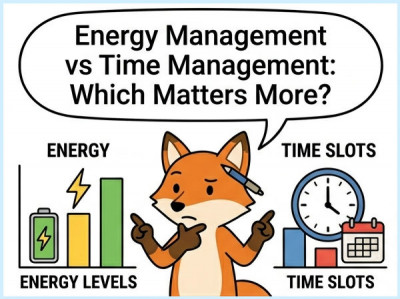
For decades, productivity advice has focused almost entirely on one resource: time.
Countless books, planners, apps, and systems promise to help people squeeze more tasks into every hour of the day.
Yet many people still end their days feeling exhausted, overwhelmed, and frustrated despite managing their schedules carefully.
The problem is simple.
Time is not the only resource that determines productivity.
In many situations, energy matters even more.
You can always schedule an hour on your calendar, but if your mental energy is depleted, that hour may produce very little meaningful work.
This is why many high performers have shifted their focus from time management to energy management.
The Fundamental Difference Between Time and Energy
Everyone receives the same 24 hours each day.
However, not everyone has the same amount of usable energy during those hours.
Some hours are naturally productive.
Others are not.
Traditional time management assumes every hour has equal value.
Energy management recognizes that some hours are dramatically more valuable than others.
| Time Management | Energy Management |
|---|---|
| Focuses on schedules | Focuses on performance |
| Treats hours equally | Recognizes energy fluctuations |
| Prioritizes efficiency | Prioritizes effectiveness |
| Asks "When?" | Asks "When am I at my best?" |
| Measures activity | Measures output quality |
Managing time helps organize your day.
Managing energy helps maximize what you accomplish during that day.
Why Productivity Isn't About Working Longer
Many people assume productivity increases when they work more hours.
Research and real-world experience suggest otherwise.
After a certain point, performance begins to decline.
Decision-making worsens.
Creativity decreases.
Errors increase.
Concentration fades.
The result is often more time spent but less meaningful output produced.
The Four Types of Energy That Affect Performance
Energy is not simply about feeling awake.
Several forms of energy influence how effectively you work.
1. Physical Energy
- Sleep quality
- Nutrition
- Exercise
- Hydration
- Overall health
Physical energy forms the foundation of all other performance factors.
2. Mental Energy
- Focus
- Concentration
- Problem-solving ability
- Decision-making capacity
Mental energy often declines after long periods of uninterrupted cognitive effort.
3. Emotional Energy
- Stress levels
- Motivation
- Confidence
- Mood
Emotional exhaustion can dramatically reduce productivity even when physical energy remains high.
4. Creative Energy
- Innovation
- Idea generation
- Strategic thinking
- Creative problem solving
Creative energy tends to fluctuate significantly throughout the day.
Your Energy Is Not Constant
Many people attempt to perform every task at the same intensity throughout the day.
Unfortunately, human energy does not work that way.
Most individuals experience predictable peaks and valleys.
Some feel most alert in the morning.
Others perform best later in the day.
The key is identifying your personal energy patterns.
| Energy Level | Best Activities |
|---|---|
| High | Deep Work, Analysis, Strategy |
| Moderate | Meetings, Collaboration |
| Low | Administrative Tasks |
| Very Low | Breaks, Recovery, Planning |
Matching tasks to energy levels can dramatically improve output.
The Hidden Cost of Decision Fatigue
Every decision consumes mental energy.
Throughout the day, people make hundreds of choices:
- What to work on
- What to eat
- Which emails to answer
- Which priorities matter most
Over time, this creates decision fatigue.
As mental resources decline, decision quality often suffers.
This explains why many successful professionals simplify routines and automate minor decisions.
Why Deep Work Depends on Energy
Deep work requires intense concentration.
It includes activities such as:
- Writing
- Coding
- Research
- Strategic planning
- Complex problem solving
Attempting deep work during low-energy periods often leads to frustration and poor results.
Instead, reserve your highest-energy hours for your most valuable tasks.
The Recovery Principle Most People Ignore
Many productivity systems focus entirely on output.
Few emphasize recovery.
Yet recovery is essential for maintaining energy.
Athletes understand this concept well.
Performance improves through a cycle of effort and recovery.
The same principle applies to knowledge work.
Effective Recovery Activities
- Walking
- Short breaks
- Exercise
- Sleep
- Mindfulness practices
- Time away from screens
Recovery is not laziness.
It is performance maintenance.
The Multitasking Problem
Many people attempt to maximize productivity through multitasking.
However, constant task switching consumes energy.
Every switch forces the brain to refocus.
This creates hidden productivity costs.
| Work Style | Energy Usage | Output Quality |
|---|---|---|
| Constant Multitasking | High | Lower |
| Focused Single Tasking | Moderate | Higher |
| Deep Work Sessions | Efficient | Excellent |
Protecting focus often preserves energy better than trying to do multiple things simultaneously.
How Sleep Influences Productivity
No energy management system can compensate for chronic sleep deprivation.
Sleep affects:
- Memory
- Attention
- Creativity
- Decision-making
- Learning ability
- Emotional regulation
Many productivity problems are actually recovery problems in disguise.
Create an Energy-Based Schedule
Instead of organizing your day solely around time blocks, organize it around energy levels.
Moderate Energy → Meetings
Lower Energy → Email & Administration
Recovery Periods → Breaks & Reflection
This approach helps align effort with capability.
The result is often higher productivity without longer working hours.
Signs You're Managing Time but Not Energy
You may have an energy management problem if you regularly experience:
- Constant fatigue
- Difficulty concentrating
- Frequent procrastination
- Burnout symptoms
- Low-quality work despite long hours
- Declining motivation
These issues often indicate depleted energy rather than poor scheduling.
The Smart Productivity Formula
The most effective professionals combine both systems.
They do not choose between time management and energy management.
They use time management to create structure and energy management to maximize performance.
| Without Time Management | Without Energy Management | Using Both |
|---|---|---|
| Disorganized Schedule | Burnout Risk | High Performance |
| Missed Deadlines | Low Focus | Consistent Output |
| Reactive Work | Exhaustion | Strategic Productivity |
So Which Matters More?
If forced to choose, energy management usually has the greater impact on productivity.
After all, an hour of exhausted work rarely equals an hour of focused, energized effort.
Time determines how long you can work.
Energy determines how well you can work.
That distinction is what separates busy people from highly productive people.
The Final Takeaway
Most productivity advice teaches people how to manage their calendars.
Far fewer people learn how to manage themselves.
Energy is the fuel behind every decision, task, conversation, and achievement.
When you understand your natural energy patterns, protect your peak performance hours, prioritize recovery, and match tasks to energy levels, productivity becomes less about working harder and more about working smarter.
Because in the end, the most valuable resource is not your time—it is the energy you bring to that time.