The Smart Way to Get Compensated for Delayed or Canceled Flights
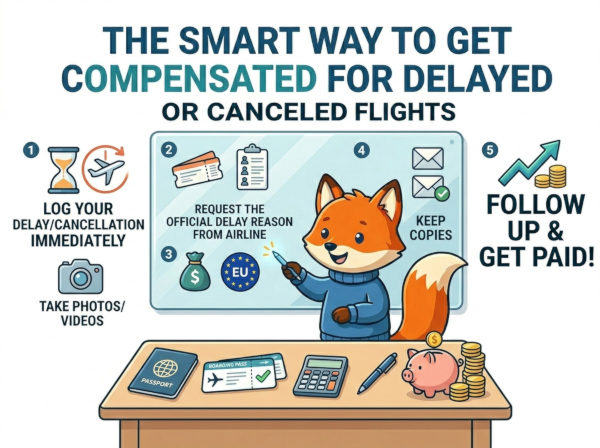
When an airline cancels or significantly delays your flight, they are not just inconveniencing you; they are violating a service contract. Most travelers accept an apology or a meal voucher, but this is a massive operational failure. Under specific aviation regulations, you are legally entitled to significant cash compensation—often far exceeding the cost of your original ticket. To collect this, you must stop acting like a "polite passenger" and start acting like a claimant.
Welcome to The Passenger Rights Protocol. You do not need to be a lawyer to secure your payout. You only need to understand the jurisdictional rules (such as EU/UK Regulation 261/2004) and follow a standardized documentation process. Today, we will deconstruct how to force airlines to pay for their operational deficiencies.
The Payout Acquisition Workflow
Airlines rely on the fact that passengers find the claims process tedious. To win, you must be more persistent than their automated rejection systems.
The 4-Step Claims Execution Blueprint
- Step 1: Verify Jurisdictional Eligibility. Check if your flight qualifies. If you departed from an EU/UK airport on *any* airline, or arrived in an EU/UK airport on an EU/UK carrier, you are covered. Document the exact length of the delay; 3 hours is the threshold for fixed-rate compensation, which can range from €250 to €600 per passenger.
- Step 2: Assemble the Evidence Dossier. Do not rely on your memory. Keep your boarding pass, the original ticket confirmation, and proof of arrival time. If the airline claims "extraordinary circumstances," search for news of regional weather or strikes to verify the claim. Airlines frequently use this as a blanket excuse to avoid payouts.
- Step 3: Direct-to-Carrier Escalation. Submit your claim through the airline’s official website form first. Avoid third-party "claims companies" initially, as they will take a 25-35% commission. If the airline denies your claim without a valid reason, send a formal "Notice Before Action" letter citing the specific regulation.
- Step 4: Execute External Intervention. If the airline remains non-compliant, escalate your claim to the national aviation authority (e.g., the CAA in the UK or the relevant agency in the departure country). This forces the airline to account for the disruption before a regulatory body, which almost always accelerates the payout.
The Compensation Matrix: Reactive vs. Proactive Recovery
Understand the difference between passively accepting airline failures and actively recovering your lost financial assets.
| Operational Metric | Passive Passenger Profile | Strategic Claimant Profile |
|---|---|---|
| Initial Response | Accepts meal voucher; waits quietly. | Logs exact arrival time; secures documentation. |
| Communication | Complains to customer service staff. | Files formal legal notice; demands regulatory compliance. |
| Recovery Outcome | Zero; loss of time and value. | Cash settlement (€250 - €600). |
| Operational Load | High: Stress of disruption. | Optimized: Asset recovery through process. |
The "Passenger Rights" Operational Code
To successfully capture your rightful compensation, treat every disruption as an "incident report" that requires follow-up. Maintain a clinical, process-oriented mindset throughout the claim.
By mastering the claims process, you shift the power dynamic. You are no longer just a passenger waiting for a flight; you are a consumer holding a carrier accountable to their legal obligations. Master these regulations, keep your documentation organized, and you will transform your travel disruptions from frustrating setbacks into successful financial recoveries.