Side Hustles Tailored Specifically for College Students with Packed Schedules
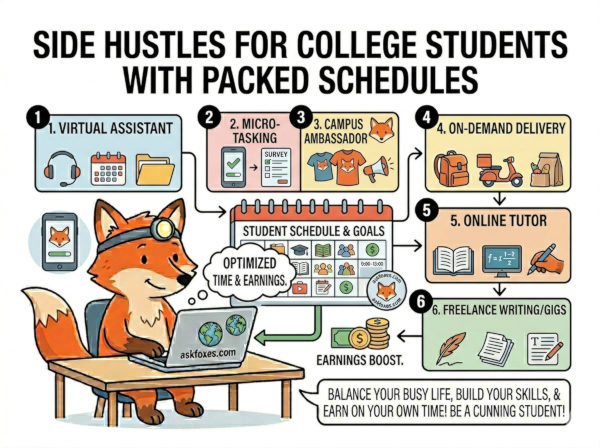
In a high-intensity academic environment, traditional hourly employment is often a trap. It forces you to trade your scarcest resource—time—for low-margin wages while imposing rigid schedules that conflict with your primary mission: academic success. To operate effectively, you must pivot to "modular" side hustles that allow for scale, autonomy, and the ability to pause work during peak study periods.
Welcome to The Academic-Side-Hustle Protocol. The objective is to achieve high-leverage income through project-based or on-demand work that respects your limited bandwidth. Today, we will deconstruct the essential high-utility side hustle frameworks for the modern student.
The High-Leverage Side Hustle Blueprint
To balance work and academics, organize your income streams by operational model: Freelance (Project-Based), Micro-Tasks (On-Demand), or Digital Asset Creation (Scalable).
The 4-Pillar Hustle Framework
- Pillar 1: Digital Freelancing. Leverage existing technical skills—such as writing, graphic design, or coding—to perform project-based work. Use platforms like Upwork or Fiverr to set your own deadlines. This allows you to scale up during light academic weeks and scale down to zero during finals.
- Pillar 2: Peer-to-Peer Academic Support. You are already immersed in an educational ecosystem; monetize that expertise. Tutor peers in subjects you have mastered, or offer specialized note-taking services for high-enrollment lecture courses. These roles often integrate directly with your study schedule, providing dual benefits.
- Pillar 3: On-Demand Gig Logistics. Utilize gig-economy platforms (like Rover for pet-sitting or localized errand services) that offer total control over your "on-call" hours. These are ideal for filling fragmented gaps in your schedule without the need for a consistent, fixed commitment.
- Pillar 4: Scalable Digital Assets. Design and sell digital products—Notion templates, specialized study guides, or custom digital assets—on platforms like Gumroad or Etsy. This requires high upfront effort but allows for passive revenue generation that does not require your real-time presence.
The Hustle Matrix: Rigid Employment vs. Modular Hustling
Compare the operational impact of standard part-time jobs against modular, high-leverage hustles.
| Metric | Traditional Employment (Rigid) | Modular Side Hustle (Optimized) |
|---|---|---|
| Scheduling | Fixed; employer dictates your time. | Dynamic; you define your own hours. |
| Scalability | Low; earnings tied strictly to hours. | High; earnings tied to output/value. |
| Cognitive Load | High; persistent stress of shifts. | Low; work when you are most efficient. |
| Academic Impact | Negative: High conflict with study. | Optimized: Controlled and integrated. |
The "Side Hustle" Operational Code
To maintain your academic output while generating revenue, treat your hustle as a structured project. Use this logic to ensure your work remains manageable:
By moving from a "shift-worker" mindset to an "operator" mindset, you can generate the capital you need without jeopardizing your degree. The goal is not just to earn money; it is to build a sustainable, flexible system that scales with your academic demands. Master these modular frameworks, maintain your boundaries, and you will thrive as both a student and a high-leverage operator.