How to Negotiate Lower Medical Bills Without Insurance
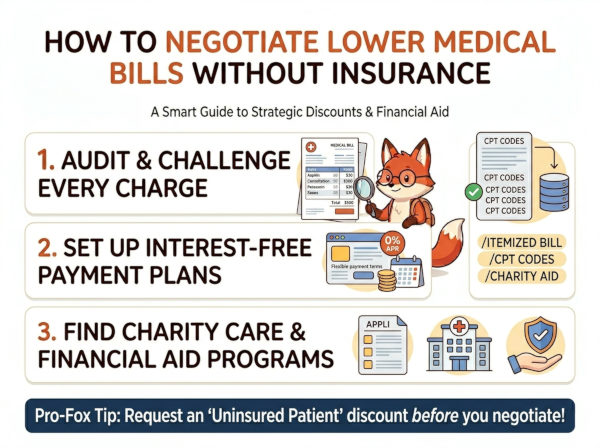
There is perhaps no bill more intimidating than a surprise medical invoice. When you are uninsured or facing high out-of-pocket costs, the number on that piece of paper often feels like a life sentence. But here is a secret most hospitals won't tell you: the prices on your bill are essentially suggestions, not fixed laws. Every single medical bill is negotiable.
Welcome to The Medical Bill Negotiator's Guide. This is one of the most critical "Smart Money" lifehacks, designed to help you regain control over your finances when dealing with the healthcare system. Today, we will walk you through the process of slashing your debt and dealing with medical billing departments effectively.
How the Billing System Works (And How to Exploit It)
Hospitals are businesses. They have a massive incentive to settle your bill for less money rather than sending it to a collections agency, where they might only recover cents on the dollar. When you receive a bill, you aren't just a patient; you are a debtor, and you have leverage.
The Step-by-Step Blueprint to Lower Your Bill
To successfully force a hospital to lower your balance, you must approach this systematically:
- Step 1: Request an Itemized Bill. Never pay a "total balance" statement. Call the billing department and request a formal, itemized statement that lists every specific pill, bandage, and procedure code.
- Step 2: Audit the Charges. Search for "CPT codes" (Current Procedural Terminology) on your bill. Compare these prices against the "Fair Health Consumer" database or "Healthcare Bluebook" to see if your hospital is charging significantly above the average market rate.
- Step 3: Negotiate via Phone. When you call, ask to speak to a supervisor or a "patient financial advocate." Use the script below to open the conversation.
- Step 4: Offer a Lump Sum Settlement. Hospitals love cash flow. If you can offer a 50% or 60% settlement paid immediately, they are often willing to wipe out the remaining balance just to close your file.
Strategic Comparison: Negotiation Tactics
Different approaches yield different results depending on your financial situation and the type of medical facility you visited.
| Strategy | Success Probability | Potential Savings |
|---|---|---|
| Asking for "Cash Discount" | High (70%) | 20% - 40% Off |
| Challenging CPT Code Errors | Medium (50%) | 100% of specific error |
| Applying for Charity Care | Very High (80%) | Up to 100% (Forgiveness) |
| Setting Up a Payment Plan | Very High (95%) | 0% off, but prevents collections |
What to Do If They Refuse?
If the billing office is being difficult, remember that you have the right to appeal. Ask for a formal review of the charges. If they still refuse to budge, mention that you are aware of the "No Surprises Act" (if applicable) and that you are prepared to file a formal complaint with the state's department of health services. Usually, the mention of "regulatory oversight" is enough to make the billing department reconsider their stance.