How to Build Credit as a Student Without Going Into Debt
Most students hear the same financial advice repeatedly:
“You need to build credit early.”
And while that advice is technically true, what many people fail to explain is how easily “building credit” can quietly turn into long-term debt problems.
Credit cards are marketed aggressively to students for a reason.
Banks know young adults often lack financial experience, emotional spending control, and understanding of interest systems. One small balance can quickly snowball into years of expensive repayments.
The good news is that building strong credit does not require carrying debt at all.
In fact, many financially smart students build excellent credit scores while paying zero interest.
Why Credit Matters More Than Students Realize
Many students ignore credit because they are not planning to buy a house anytime soon.
But credit history affects far more than mortgages.
A strong credit profile can improve:
- Apartment rental approvals
- Car financing rates
- Future loan interest rates
- Insurance pricing
- Utility deposits
- Financial flexibility after graduation
Building healthy credit early creates long-term advantages that compound for years.
The Biggest Myth About Credit Building
One of the most dangerous financial myths students believe is:
“You need to carry a balance to build credit.”
This is false.
You do not need to pay interest to build a strong credit score.
Responsible usage matters far more than carrying debt.
How Credit Card Interest Quietly Traps Students
Student credit cards often appear harmless initially.
Small purchases feel manageable:
- Coffee
- Food delivery
- Subscriptions
- Online shopping
- Entertainment spending
But interest compounds quickly when balances remain unpaid.
| Credit Card Balance | Typical APR | Long-Term Cost if Ignored |
|---|---|---|
| $500 | 20% - 28% | Moderate |
| $1,000 | 20% - 28% | High |
| $3,000 | 20% - 30% | Severe |
| $5,000+ | 25%+ | Financially Dangerous |
Many students underestimate how long high-interest debt can follow them after graduation.
The Safest Beginner Strategy: The “Small Controlled Spending” Method
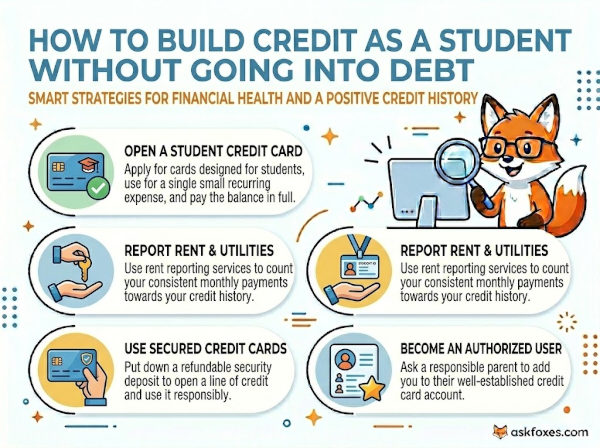
One of the safest ways students build credit is by treating a credit card like a debit card.
This means:
- Using the card for small planned purchases
- Never spending money you do not already have
- Paying the balance fully every month
- Avoiding emotional or impulse purchases
Simple Beginner Setup
2. Use it for one recurring expense only
3. Example: Spotify, Netflix, or phone bill
4. Enable automatic full payment
5. Never carry a balance month-to-month
This creates consistent payment history while minimizing risk.
Why Payment History Matters So Much
The single most important factor in most credit scoring systems is payment history.
Late payments can damage scores significantly.
Even one missed payment may remain on credit reports for years.
| Financial Behavior | Credit Score Impact |
|---|---|
| On-time payments | Strong positive impact |
| Late payments | Severe negative impact |
| High credit usage | Negative impact |
| Long account history | Positive impact |
| Frequent new accounts | Temporary negative impact |
The Credit Utilization Trap
Another major factor many students misunderstand is credit utilization.
This refers to how much of your available credit limit you are using.
For example:
- $100 balance on a $1,000 limit = 10% utilization
- $900 balance on a $1,000 limit = 90% utilization
High utilization signals financial stress to lenders — even if payments are made on time.
The Danger of “Free Money” Psychology
Credit cards create psychological distance from spending.
Cash feels real immediately.
Credit often feels abstract.
This disconnect causes many students to spend more impulsively than they normally would with cash or debit.
Social pressure and lifestyle inflation make the problem even worse during college years.
Why Buy Now, Pay Later Can Also Hurt Students
Many students avoid credit cards but fall into alternative debt systems instead.
Buy Now, Pay Later services often encourage:
- Impulse spending
- Overconsumption
- Payment stacking
- Budget confusion
Multiple small installment plans can quietly become financially overwhelming.
The Smartest Credit Habits Students Can Build
Students who build excellent long-term financial health usually focus on habits rather than shortcuts.
Strong Beginner Credit Habits
2. Never miss payment deadlines
3. Keep utilization low
4. Avoid emotional spending
5. Track all subscriptions carefully
6. Build emergency savings alongside credit
These habits matter far more than chasing rewards points or flashy premium cards.
Why Emergency Savings Matter More Than Credit Scores
Many young adults obsess over improving their credit score while completely ignoring emergency savings.
This creates a dangerous situation:
- Unexpected expense appears
- No cash savings available
- Credit card balance increases suddenly
- Interest begins compounding
- Debt cycle starts developing
Even small emergency funds dramatically reduce financial stress and reliance on debt.
The Student’s Final Financial Rule
Credit cards are not inherently dangerous.
But misunderstanding them is.
The smartest students use credit strategically:
- Build payment history
- Avoid interest completely
- Control spending emotionally
- Protect long-term financial flexibility
Because the goal is not simply building a higher credit score.
The goal is creating a financial foundation strong enough that future opportunities become easier — not more expensive.