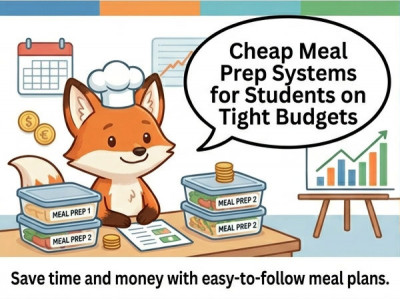
Cheap Meal Prep Systems for Students on Tight Budgets
For students, food expenses are one of the fastest ways monthly budgets disappear.
Between busy schedules, exams, part-time jobs, and social life, convenience often becomes more important than cost efficiency.
This is why many students overspend on takeout, snacks, and last-minute meals.
A simple meal prep system can dramatically reduce food costs while also improving consistency, energy levels, and focus.
Why Students Overspend on Food
Food spending is often driven by convenience rather than planning.
Common student spending traps include:
- Daily fast food purchases
- Late-night delivery orders
- Unplanned snack buying
- Cafeteria impulse spending
- Repeated grocery waste
Individually, these seem small. Over a month, they become a major budget drain.
The Core Idea Behind Cheap Meal Prep
Meal prep is not about eating the same boring food every day.
It is about reducing decision-making and maximizing value per meal.
The goal is to cook once and eat multiple times with minimal extra effort.
This reduces both time cost and financial cost per meal.
The Budget Meal Prep Formula
A successful low-cost system usually follows a simple structure:
- 1–2 main proteins
- 1–2 carbohydrate bases
- Affordable vegetables
- Simple seasoning combinations
- Reusable meal combinations
This approach allows flexibility without complexity.
Cheap Staple Foods That Go Further
Some foods are naturally more cost-efficient per serving.
Budget-friendly staples include:
- Rice
- Pasta
- Oats
- Eggs
- Potatoes
- Lentils
- Frozen vegetables
These ingredients provide high calories and decent nutrition at low cost.
The “Cook Once, Eat Multiple Times” Strategy
One of the most effective student budgeting methods is batch cooking.
Instead of cooking daily, prepare larger portions 2–3 times per week.
Example Weekly Structure
- Sunday: Cook rice + chicken + vegetables
- Wednesday: Cook pasta-based meals
- Friday: Simple mixed meals or leftovers
This reduces cooking time while maintaining variety.
Simple Student Meal Prep Combinations
You don’t need complex recipes to eat well on a budget.
Some reliable combinations include:
- Rice + eggs + vegetables
- Pasta + tomato sauce + lentils
- Oats + banana + peanut butter
- Potatoes + chicken + spices
- Rice + tuna + frozen veggies
These meals are cheap, filling, and easy to repeat.
Grocery Shopping Strategy for Students
Smart shopping is just as important as cooking.
Without a plan, students tend to overspend on unnecessary items.
Basic Grocery Rules
- Shop with a list only
- Buy in bulk when possible
- Avoid pre-packaged meals
- Compare unit prices, not package prices
- Stick to staple ingredients
Small changes in shopping behavior can significantly reduce monthly food expenses.
The Freezer Is Your Budget Weapon
One of the most underrated student tools is freezer storage.
Frozen meals reduce waste and increase flexibility.
You can freeze:
- Cooked rice
- Cooked meat portions
- Vegetable mixes
- Prepared sauces
This allows you to build meals quickly without cooking from scratch every time.
Time vs Money Trade-Off in Meal Prep
Meal prep is essentially a trade-off between time and money.
You spend a few hours cooking in exchange for:
- Lower daily food costs
- Fewer delivery orders
- Reduced decision fatigue
- More stable eating habits
For students, this trade-off is usually highly favorable.
The Biggest Student Mistake: No System
Most students don’t fail because food is expensive.
They fail because they don’t have a repeatable system.
This leads to:
- Random grocery purchases
- Food waste
- Frequent delivery spending
- Inconsistent meals
A simple system eliminates these problems automatically.
How to Build a 30-Minute Emergency Meal
Every student should have backup meals for busy or stressful days.
Examples include:
- Egg + toast combo
- Oats with milk and fruit
- Rice with leftover protein
- Frozen vegetable stir-fry
These prevent expensive takeout decisions.
Eating Cheap Without Losing Nutrition
Low-cost food does not have to mean unhealthy food.
Balance is important for focus and energy.
A good student diet includes:
- Protein for energy stability
- Carbohydrates for fuel
- Vegetables for micronutrients
- Healthy fats in moderation
Simple meals can still be nutritionally effective.
The Smart Student Habit Most People Ignore
The biggest financial difference is not what students eat—but how they plan.
A structured meal prep system reduces stress, saves money, and improves daily performance.
Over time, these small habits create significant financial savings and better lifestyle control.
The Final Rule of Student Budget Eating
You don’t need expensive food to eat well.
You need consistency, simplicity, and a repeatable system.
Once meal prep becomes routine, food stops being a financial problem and becomes a predictable part of your weekly schedule.
That stability is what makes it one of the most powerful student life hacks.