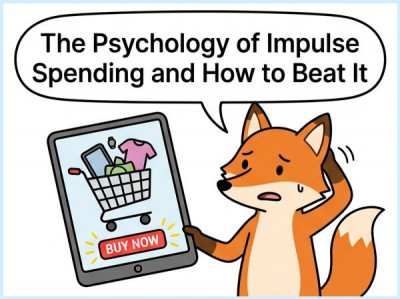
The Psychology of Impulse Spending and How to Beat It
Most people do not struggle financially because they occasionally buy expensive items.
More often, financial goals are undermined by dozens of small, seemingly harmless purchases made without much thought.
A coffee here, an online sale there, a late-night purchase after scrolling social media.
Individually, these expenses may appear insignificant.
Together, they can quietly consume hundreds or even thousands of dollars every year.
This behavior is known as impulse spending, and understanding the psychology behind it is one of the most valuable money skills a person can develop.
Why Impulse Spending Happens
Many people assume impulse purchases occur because of poor self-control.
In reality, human brains are naturally wired to seek immediate rewards.
From an evolutionary perspective, taking advantage of available resources often improved survival.
Modern marketing takes advantage of these same psychological tendencies.
The result is a constant battle between short-term gratification and long-term financial goals.
The Brain's Reward System
Every purchase creates a small sense of anticipation and reward.
This response is linked to dopamine, a neurotransmitter associated with motivation and pleasure.
Interestingly, people often experience more excitement while anticipating a purchase than after owning the item.
This explains why shopping itself can feel rewarding even when the purchased item adds little long-term value.
The Most Common Impulse Spending Triggers
Impulse purchases rarely happen randomly.
Most are triggered by specific situations, emotions, or environments.
Emotional Triggers
- Stress
- Boredom
- Loneliness
- Anxiety
- Frustration
- Celebration
Many people unknowingly use spending as a form of emotional regulation.
Buying something new can temporarily create feelings of comfort, excitement, or control.
Environmental Triggers
- Flash sales
- Limited-time offers
- Social media advertisements
- Email promotions
- Shopping apps
- Influencer recommendations
Modern consumers encounter hundreds of purchase prompts every day.
How Retailers Encourage Impulse Purchases
Businesses spend billions of dollars studying consumer behavior.
Many sales techniques are specifically designed to encourage quick decisions.
| Marketing Tactic | Psychological Effect | Typical Consumer Response |
|---|---|---|
| Limited-Time Sale | Fear of Missing Out | Faster Decisions |
| Low Stock Warning | Scarcity Effect | Urgency |
| Free Shipping Threshold | Value Perception | Extra Purchases |
| Buy One Get One | Reward Feeling | Higher Spending |
| Personalized Ads | Relevance | Increased Interest |
These strategies are effective because they target predictable human behaviors.
The Hidden Cost of Small Purchases
Many impulse purchases seem harmless because of their low price.
People often think:
- "It's only $5."
- "It's just one subscription."
- "It's a small treat."
The problem is repetition.
Small expenses accumulate surprisingly quickly over time.
| Daily Expense | Monthly Cost | Annual Cost |
|---|---|---|
| $3 | $90 | $1,095 |
| $5 | $150 | $1,825 |
| $10 | $300 | $3,650 |
| $20 | $600 | $7,300 |
Understanding cumulative spending is one of the first steps toward building better money habits.
The Emotional Spending Cycle
Impulse spending often follows a predictable pattern.
2. Desire for relief or reward develops
3. Purchase is made
4. Temporary satisfaction occurs
5. Satisfaction fades
6. Trigger eventually returns
Because the emotional benefit is temporary, the cycle frequently repeats.
This is why emotional spending can become a long-term financial obstacle.
How Social Media Fuels Impulse Buying
Social media platforms are designed to capture attention.
Many users encounter a constant stream of products, recommendations, and lifestyle content.
This creates comparison pressure.
People begin to associate products with success, happiness, status, or belonging.
As a result, spending decisions become increasingly emotional rather than practical.
The 24-Hour Rule
One of the simplest and most effective tools for controlling impulse spending is delay.
Instead of purchasing immediately, wait before making a decision.
How It Works
- Add the item to a wishlist
- Wait 24 hours
- Reevaluate the purchase later
- Ask whether the desire still exists
Many impulse purchases lose their appeal after a short waiting period.
Create Spending Friction
Retailers work hard to make spending easy.
Smart consumers can reverse this process by adding small obstacles.
Examples of Spending Friction
- Removing saved payment information
- Deleting shopping apps
- Unsubscribing from promotional emails
- Disabling one-click purchasing
- Using cash for discretionary spending
Even minor inconveniences can dramatically reduce impulse purchases.
Replace Shopping With Alternative Rewards
Many people shop because they seek a quick emotional boost.
The solution is not necessarily eliminating rewards.
It is finding healthier alternatives.
- Exercise
- Reading
- Walking outdoors
- Learning a new skill
- Calling friends or family
- Working toward a personal goal
These activities can provide satisfaction without creating financial consequences.
The Difference Between Wants and Needs
Most impulse purchases fall into the category of wants rather than needs.
However, emotions can blur the distinction.
| Need | Want |
|---|---|
| Necessary for daily living | Enhances enjoyment |
| Essential expense | Optional expense |
| Limited flexibility | Highly flexible |
| Supports basic functioning | Supports preferences |
Asking whether a purchase solves a real problem often reveals its true importance.
Build a Personal Spending Filter
Before making a purchase, consider asking yourself:
2. Would I buy it at full price?
3. Will I still value it next month?
4. Does it support my financial goals?
5. What am I giving up by spending this money?
These questions encourage intentional decision-making.
How Micro-Investing Changes Spending Behavior
One powerful strategy involves redirecting small amounts of money toward investments instead of purchases.
When people begin investing regularly, they often view money differently.
A small purchase is no longer just a small purchase.
It becomes a choice between immediate consumption and future growth.
Focus on Financial Identity
Long-term behavioral change is often easier when it becomes part of personal identity.
Instead of saying:
- "I'm trying to save money."
Consider adopting a mindset such as:
- "I'm someone who spends intentionally."
- "I'm building wealth."
- "I make thoughtful financial decisions."
Identity-based habits tend to be more sustainable than short-term motivation.
The Smart Money Approach to Spending
The goal is not to eliminate enjoyment or avoid every non-essential purchase.
The goal is to ensure spending aligns with personal priorities and long-term goals.
Intentional spending creates more satisfaction because purchases become conscious choices rather than automatic reactions.
Over time, this shift can improve savings, reduce financial stress, and create a stronger sense of control over money.
The Final Takeaway
Impulse spending is not simply a financial problem—it is a psychological one.
Retailers, technology platforms, and human emotions all contribute to unplanned spending decisions.
Fortunately, awareness creates power.
When you recognize your triggers, introduce deliberate pauses, and focus on long-term goals, spending becomes a tool rather than a habit.
The people who build lasting wealth are not necessarily those who earn the most. They are often the ones who learn how to pause, think, and spend with intention.