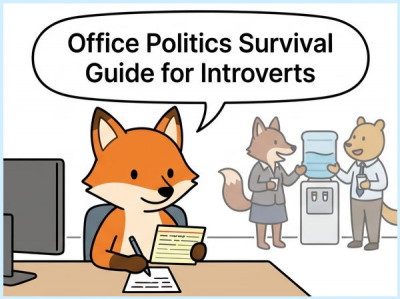
Office Politics Survival Guide for Introverts
When people hear the phrase "office politics," they often imagine manipulation, favoritism, and endless networking events.
For introverts, the concept can feel particularly uncomfortable.
Many prefer focusing on quality work rather than social maneuvering.
Unfortunately, ignoring workplace dynamics completely can create career obstacles that have little to do with job performance.
The reality is that office politics exist in nearly every organization. Promotions, opportunities, leadership visibility, and project assignments are often influenced by relationships as much as results.
The good news is that surviving office politics does not require becoming loud, aggressive, or inauthentic.
Introverts can often navigate workplace dynamics extremely effectively by leveraging strengths such as observation, preparation, reliability, and thoughtful communication.
Why Introverts Often Dislike Office Politics
Many introverts view workplace politics as unnecessary distractions from meaningful work.
They may believe that performance alone should determine career success.
While competence is essential, organizations are ultimately made up of people, and people make decisions based on both results and relationships.
Common reasons introverts struggle with office politics include:
- Discomfort with self-promotion
- Avoidance of workplace conflict
- Preference for deep work over networking
- Limited interest in small talk
- Reluctance to seek attention
These traits are not weaknesses, but they can create visibility challenges if left unmanaged.
The Biggest Myth About Career Advancement
One of the most common workplace myths is:
"If I work hard enough, people will notice."
Sometimes they do.
Often they don't.
Managers, executives, and colleagues are busy. Important contributions can easily go unnoticed if they are not communicated effectively.
Visibility matters.
The challenge for introverts is learning how to increase visibility without becoming performative.
Understand the Real Power Structure
Every workplace has two organizational charts.
- The official structure
- The informal influence structure
The official chart shows job titles.
The informal network reveals who people trust, who influences decisions, and who has leadership credibility.
Successful employees understand both.
| Formal Influence | Informal Influence |
|---|---|
| Job Title | Trust |
| Authority | Reputation |
| Management Role | Relationships |
| Official Responsibility | Organizational Credibility |
Introverts often excel at identifying these dynamics because they naturally observe before acting.
Build Strategic Relationships, Not Massive Networks
Many career advice articles emphasize networking with as many people as possible.
That approach often feels exhausting for introverts.
Fortunately, quantity is not the goal.
Strong professional relationships are usually more valuable than large numbers of shallow connections.
Focus On:
- Your direct manager
- Key team members
- Cross-functional partners
- Respected senior employees
- Potential mentors
A few trusted professional relationships can have a greater career impact than dozens of casual contacts.
Learn the Art of Quiet Visibility
Visibility does not require dominating meetings or constantly talking about accomplishments.
Introverts often succeed through quiet visibility.
Examples Include:
- Providing thoughtful project updates
- Sharing useful insights
- Documenting achievements clearly
- Contributing valuable ideas
- Following through consistently
The goal is ensuring your work becomes visible without appearing self-centered.
Speak Up Before You Feel Ready
Many introverts wait until they have fully developed thoughts before contributing.
Meanwhile, more vocal colleagues often shape discussions early.
You do not need to speak constantly.
However, contributing earlier in meetings increases visibility and influence.
Even brief comments can have a significant impact.
Examples:
- "I think there may be another approach worth considering."
- "Here's a potential risk we should evaluate."
- "I noticed something in the data that may help."
Thoughtful contributions often carry more weight than frequent comments.
Document Your Wins
Many professionals underestimate how quickly accomplishments are forgotten.
Keep a simple record of:
- Projects completed
- Problems solved
- Revenue generated
- Costs reduced
- Process improvements
- Positive feedback received
This information becomes valuable during:
- Performance reviews
- Promotion discussions
- Salary negotiations
- Internal job opportunities
Avoid the Introvert Conflict Trap
Many introverts dislike confrontation.
As a result, they sometimes avoid difficult conversations entirely.
This can create larger problems later.
Addressing issues early is usually easier than fixing damaged relationships after months of frustration.
Healthy Conflict Looks Like:
- Discussing problems directly
- Remaining professional
- Focusing on solutions
- Avoiding personal attacks
- Clarifying expectations
Conflict avoidance often creates more stress than respectful conflict resolution.
Understand Reputation Management
Whether intentional or not, every employee develops a workplace reputation.
People form opinions based on repeated behaviors.
| Behavior | Potential Reputation |
|---|---|
| Consistently Prepared | Reliable |
| Calm Under Pressure | Trustworthy |
| Helpful to Others | Collaborative |
| Misses Deadlines | Unreliable |
| Avoids Communication | Disconnected |
Reputation often influences opportunities long before formal evaluations occur.
Find Allies Across Departments
Many important projects require cooperation between multiple teams.
Building positive relationships outside your immediate department creates advantages throughout your career.
Cross-functional allies can:
- Share information
- Recommend opportunities
- Support initiatives
- Provide valuable perspectives
- Increase organizational visibility
Introverts often excel at developing these relationships through one-on-one conversations rather than large group interactions.
Recognize Political Red Flags
Not all workplace politics are healthy.
Some environments contain genuinely toxic behaviors.
Warning Signs Include:
- Constant gossip
- Credit stealing
- Blame shifting
- Information hoarding
- Public humiliation
- Favoritism without accountability
Recognizing these patterns helps you protect your reputation and avoid unnecessary involvement.
Master One-on-One Influence
Introverts frequently perform better in smaller conversations than large group settings.
This can become a significant advantage.
Many influential workplace decisions are shaped through individual conversations rather than public meetings.
Strong one-on-one communication often creates deeper trust and stronger professional relationships.
The Power of Asking Good Questions
Influence does not always come from having answers.
Sometimes it comes from asking thoughtful questions.
Examples:
- "What challenge are we trying to solve?"
- "How will success be measured?"
- "What risks should we consider?"
- "What resources would help this project succeed?"
Good questions often demonstrate strategic thinking more effectively than lengthy speeches.
Build a Reputation for Solutions
Organizations value people who solve problems.
When challenges arise, focus on identifying practical next steps rather than simply highlighting issues.
Employees who consistently bring solutions often become trusted advisors regardless of personality type.
The Smart Introvert's Career Strategy
Successful introverts rarely win by trying to imitate extroverts.
Instead, they leverage their natural strengths.
- Observation
- Preparation
- Deep thinking
- Reliability
- Listening skills
- Relationship depth
These qualities can create significant professional influence when used intentionally.
The Final Takeaway
Office politics are not something you must love, but they are something you should understand.
Career growth depends on more than technical ability alone.
Relationships, visibility, trust, and reputation all play important roles in professional success.
For introverts, the goal is not becoming louder or more aggressive.
The goal is becoming strategically visible, building meaningful relationships, and ensuring your contributions receive the recognition they deserve.
When approached thoughtfully, office politics become less about manipulation and more about understanding how influence works inside organizations—and using that knowledge to grow your career authentically.