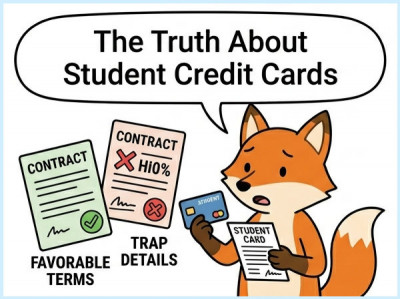
The Truth About Student Credit Cards
For many students, a credit card represents a first step into the world of personal finance.
Credit card companies often market student cards as tools for building credit, earning rewards, and gaining financial independence.
While these benefits can be real, student credit cards can also become expensive mistakes when used without a clear understanding of how credit actually works.
The truth is that a student credit card is neither inherently good nor bad.
Its value depends entirely on how it is used.
For students trying to graduate with minimal debt and strong financial habits, understanding the risks and opportunities is essential.
Why Credit Card Companies Target Students
Students represent a valuable long-term customer base.
Many people obtain their first credit card during college and continue using financial products from the same institution for years.
As a result, banks actively compete for student customers.
Common marketing messages include:
- Build credit early
- Earn rewards on purchases
- Gain financial flexibility
- Handle emergencies
- Learn responsible money management
These benefits can be legitimate, but they only apply when the card is managed properly.
The Biggest Myth About Student Credit Cards
Many students believe they need to carry a balance to build credit.
This is one of the most common personal finance misconceptions.
You do not need to pay interest to build a strong credit history.
In fact, paying your balance in full every month is usually the smartest strategy.
How Credit Scores Actually Work
Understanding the basics of credit scoring helps students avoid costly mistakes.
While scoring models vary, several factors typically play major roles.
| Factor | Why It Matters |
|---|---|
| Payment History | Shows reliability |
| Credit Utilization | Measures debt usage |
| Length of Credit History | Demonstrates experience |
| Credit Mix | Shows different account types |
| New Credit Applications | Reflects borrowing behavior |
For most students, paying on time consistently has the greatest impact.
The Advantages of Student Credit Cards
When used responsibly, student credit cards can provide several benefits.
1. Building Credit History
Credit history affects many areas of adult life, including:
- Apartment applications
- Auto loans
- Mortgage approvals
- Insurance pricing in some regions
- Financial opportunities
Starting early can provide a head start.
2. Emergency Financial Flexibility
Unexpected expenses happen.
While an emergency fund should remain the primary defense, a credit card can provide temporary flexibility when necessary.
3. Fraud Protection
Credit cards often provide stronger consumer protections than debit cards.
Unauthorized transactions are generally easier to dispute.
4. Rewards and Cashback
Some student cards offer:
- Cashback rewards
- Travel points
- Purchase protections
- Student-focused benefits
However, rewards only create value if balances are paid in full.
The Hidden Risks Students Often Ignore
The convenience of credit can create problems surprisingly quickly.
Because purchases do not immediately reduce bank account balances, spending can feel less painful.
This psychological effect often encourages overspending.
Common Student Credit Card Mistakes
- Making minimum payments only
- Missing payment deadlines
- Using cards for everyday overspending
- Ignoring interest rates
- Treating credit limits as spending targets
Small mistakes can become expensive habits.
Understanding Minimum Payments
Many students mistakenly believe making the minimum payment is enough.
Technically it is enough to keep the account current.
Financially, it is often one of the most expensive options.
| Payment Method | Interest Cost | Debt Reduction Speed |
|---|---|---|
| Minimum Payment Only | High | Very Slow |
| Partial Balance Payment | Moderate | Moderate |
| Full Balance Payment | Typically None | Immediate |
Paying the full statement balance each month usually prevents interest charges from accumulating.
The Credit Utilization Trap
A common beginner mistake involves maxing out available credit.
Even if payments are made on time, high credit utilization can negatively affect credit scores.
Many financial experts recommend keeping utilization relatively low.
Example
- $1,000 credit limit
- $200 balance
- 20% utilization
Lower utilization generally signals responsible credit management.
Student Credit Cards vs Debit Cards
Each option serves a different purpose.
| Feature | Student Credit Card | Debit Card |
|---|---|---|
| Builds Credit History | Yes | No |
| Borrowed Funds | Yes | No |
| Interest Charges | Possible | No |
| Overspending Risk | Higher | Lower |
| Fraud Protection | Often Stronger | Varies |
Many students benefit from using both strategically.
The Smart Way to Use a Student Credit Card
The safest approach treats a credit card like a debit card.
Only spend money that already exists in your bank account.
This prevents debt accumulation while still providing credit-building benefits.
2. Track the expense immediately
3. Set aside payment funds
4. Pay the statement balance in full
5. Repeat consistently
This system allows students to build credit without relying on debt.
Should Students Use Credit Cards for Emergencies?
Ideally, emergencies should be covered by savings.
However, many students are still building financial stability.
In genuine emergencies, a credit card may provide temporary support.
The key word is temporary.
Emergency spending should be accompanied by a clear repayment plan.
Warning Signs of Credit Card Trouble
Students should pay attention to early warning signals.
- Only making minimum payments
- Regularly carrying balances
- Using credit for basic living expenses
- Avoiding account statements
- Feeling anxious about balances
Recognizing problems early can prevent long-term debt issues.
The Debt-Free Student Strategy
Students focused on graduating with minimal debt should view credit cards primarily as financial tools rather than borrowing tools.
The goal is not to access more spending power.
The goal is to establish healthy financial habits.
Best Practices
- Pay on time every month
- Pay balances in full
- Keep utilization low
- Track spending carefully
- Avoid impulse purchases
- Build an emergency fund simultaneously
These habits provide benefits long after graduation.
The Long-Term Impact of Early Credit Decisions
The financial choices made during college often influence future opportunities.
A strong credit history can make life easier when applying for housing, financing major purchases, or pursuing other financial goals.
Conversely, excessive debt and missed payments can create obstacles that persist for years.
Small decisions today can have surprisingly large effects later.
The Final Verdict
Student credit cards are neither financial miracles nor financial disasters.
They are tools.
Used responsibly, they can help build credit, provide fraud protection, and support financial development.
Used carelessly, they can become an expensive source of debt during a period when financial resources are often limited.
The smartest students understand that the true purpose of a student credit card is not spending more money.
It is learning how to manage money wisely while building a strong financial foundation for the future.