Buying Out of Season: A Calendar of When to Buy Clothes, Tech, and Appliances
Retail marketing departments spend billions of dollars creating artificial urgency around new product launches. They want you to believe that you absolutely must buy a heavy winter parka in November, a fresh swimsuit in June, or a flagship smartphone the exact week it drops. But if you purchase items when consumer demand is at its absolute peak, you are willingly volunteering to pay a steep "convenience premium."
Welcome to The Off-Season Counter-Protocol. Retailers operate on tight inventory timelines; they physically cannot afford to let old stock take up valuable shelf space when a new season rolls around. By shifting your shopping schedule just a few months ahead or behind the crowd, you can capture identical, high-quality merchandise for a fraction of the cost. Today, we map out the internal markdown calendar.
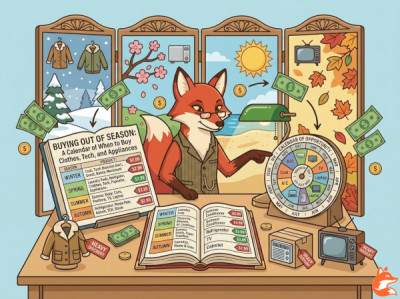
The Universal Off-Season Calendar (A Category-by-Category Guide)
To outsmart retail systems, you must buy what the general public is actively ignoring. When no one else wants a specific item, the corporate algorithms automatically trigger progressive markdowns until the inventory moves.
The Smart Fox Off-Season Blueprint
Synchronize your high-ticket purchases with these industry-verified liquidation windows to capture maximum structural savings:
- Winter Clothing & Cold-Weather Gear (Buy in March): By the time March hits, clothing retailers are desperate to hang up light spring dresses and short-sleeve shirts. This is the golden window to find heavy wool coats, insulated boots, sweaters, and ski equipment on final clearance racks at up to 60% off.
- Major Appliances (Buy in September & October): Major appliance manufacturers introduce their new refrigerator, washing machine, and dishwasher models every autumn. To make room on the showroom floors, stores slash prices on the current year’s excellent models right around Labor Day and throughout October.
- Summer Apparel & Outdoor Patio Ware (Buy in late August): The moment the back-to-school rush peaks, summer is dead in the eyes of corporate retail. Swimsuits, shorts, t-shirts, grills, and outdoor patio furniture see their steepest price cuts as stores prepare for autumn inventory.
- Laptops, Computers & Tech Assets (Buy in April & May): The tech industry heavily refreshes its core hardware lineups following winter trade shows. Older generation—yet incredibly powerful—laptops and computer hardware hit their lowest baseline pricing during late spring as companies clear out old configurations.
Real-World Effectiveness: Seasonal Discounts Compared
Timing your purchases doesn't just save you a couple of dollars; across big-ticket items, it fundamentally alters the financial math of your household budget.
| Product Category | Peak Price Window (Avoid) | Off-Season Window (Buy) | Average Market Discount |
|---|---|---|---|
| Major Kitchen Appliances | May (Spring Remodeling Peak) | September - October | 30% - 40% Off |
| Winter Outerwear & Boots | November - December | Late February - March | 50% - 60% Off |
| Smartphones & Consumer Tech | September (Launch Month) | April - May | 20% - 30% Off (Older Models) |
| Fitness Gear & Memberships | January (Resolution Peak) | June - August | 25% - 35% Off |
The 2-Step Strategic Framework for Off-Season Execution
Shopping out of season requires a shift in consumer habits. You cannot buy an item the exact night you need it. Instead, you must build an automated acquisition system.
1. Deploy Digital Price-History Sniffers
Retailers often disguise regular prices as "sales" during peak seasons. To verify if an off-season price is a genuine historical low, use price-tracking extensions like CamelCamelCamel (for Amazon) or Honey. Paste the product URL into the tracker and look at the 1-year chart. If the line isn't sitting at or near its absolute lowest point over the past 365 days, ignore the promotional tag and wait for the true seasonal drop.
2. Run the "Anticipatory Wardrobe" Script
For children's clothing or personal seasonal apparel, never buy the size that fits perfectly right now during peak months. Instead, buy one size up during the off-season clearances. You can run this exact logic loop inside your digital shopping ledger:
IF current_month == "March" AND category == "Winter_Gear" THEN
SET purchase_size = target_size + 1;
EXECUTE_CLEARANCE_ACQUISITION -> markdown_depth >= 50%;
STORE_FOR_NEXT_YEAR = TRUE;
END IF;
END FOR;
By purchasing a size larger during the end-of-season markdowns, you ensure that when the next seasonal weather shift occurs, your household is already fully stocked with premium assets acquired at wholesale-level pricing, completely bypassing the upcoming peak-retail tax.