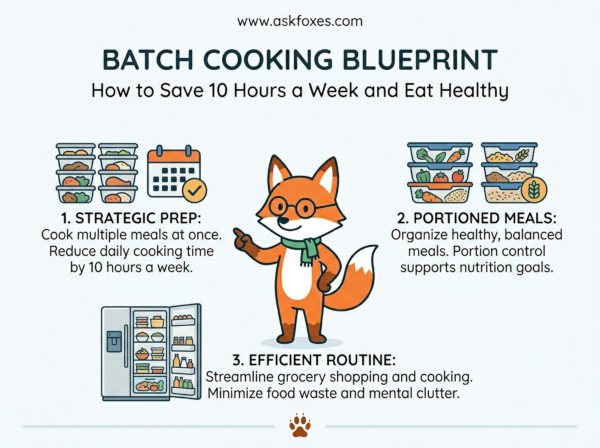
Batch Cooking Blueprint: How to Save 10 Hours a Week and Eat Healthy
The average professional spends hours every week deciding what to eat, shopping for ingredients, and preparing meals, only to succumb to convenient, low-quality takeout when energy levels drop. This isn't just a nutritional failure; it is a massive drain on your cognitive bandwidth and your weekly time budget. To reclaim those hours and maintain peak energy, you must stop treating cooking as a daily chore and start treating it as a once-a-week operational project.
Welcome to The Batch Cooking Blueprint. This is not about spending all Sunday in the kitchen; it is about applying systems thinking to your nutrition. By preparing your high-performance fuel in bulk, you remove the daily "decision friction" of eating, ensuring you never have to waste willpower on meal planning when you should be focusing on your high-leverage work. Today, we will deconstruct the exact assembly-line strategy to dominate your nutrition in just three hours.
The Assembly-Line Strategy: Systems for Speed
Successful batch cooking requires a shift in workflow. Stop thinking about "cooking a meal" and start thinking about "processing a batch." The goal is to maximize the utility of your kitchen equipment—the oven, the stovetop, and the blender—so that all components are cooking simultaneously.
The 4-Step Batch Cooking Blueprint
- Step 1: The "Power-Pairing" Grocery List. Focus on high-versatility ingredients that can be repurposed. Buy bulk quantities of three protein sources (e.g., chicken, tofu, lentils), three complex carbohydrate sources (e.g., quinoa, sweet potatoes, brown rice), and five massive bags of frozen vegetables.
- Step 2: Initialize Concurrent Preparation. The core of the blueprint is parallel processing. Start your grains on the stovetop, roast your proteins and starches in the oven at 200°C simultaneously, and use the prep time while they cook to portion out your containers.
- Step 3: Build "Flavor Foundations" Rather Than Finished Meals. Don't cook specific dishes. Cook neutral, healthy foundations. Store your proteins, grains, and veggies separately in bulk containers. This allows you to mix and match with different sauces, spices, or toppings throughout the week so you never suffer from "meal boredom."
- Step 4: The 10-Minute Sunday Reset. Spend exactly 10 minutes at the end of the week cleaning your containers and checking your inventory. This prevents the "what do I need?" panic and ensures you are ready to execute your next batch sprint immediately.
The Nutrition Matrix: Reactive vs. Batch-Optimized
Analyze how your time is currently allocated to see the immediate return on investment for your weekly nutrition operations.
| Metric | The Reactive Daily Grind | The Batch-Cooking Protocol |
|---|---|---|
| Time Investment | 10+ hours/week (planning, shopping, daily cooking, cleaning). | 3 hours/week (focused batch sprint). |
| Decision Load | Constant; daily fatigue-inducing choices. | Zero; nutrition is automated for the entire week. |
| Nutritional Quality | Variable; prone to convenience-based junk food. | Consistently high-performance, clean fuel. |
| Workplace Focus | Distracted: Energy spent on daily logistics. | Optimized: Nutrition supports sustained cognitive output. |
The "Nutrition Automation" Operational Code
When you commit to batch cooking, you essentially outsource your daily hunger management to your past self. Maintain this operational discipline to ensure you don't drift back into the reactive daily trap:
By shifting your nutrition to a batch-optimized model, you treat your body like the high-performance engine it is. You save massive amounts of time, reduce your decision fatigue, and ensure that your physical health is never the variable that limits your work output. Master the batch, and you effectively manufacture the extra hours required to pursue your goals, all while fueling yourself for success.