The Incognito Window Myth: What Actually Works to Get Cheaper Flights?
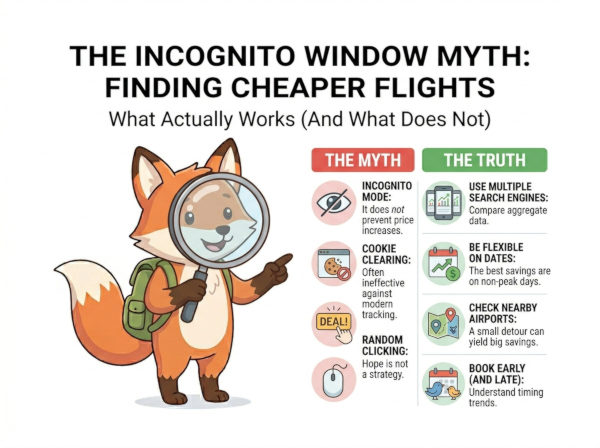
There is a pervasive myth in the travel community that airlines track your search history via cookies and artificially inflate prices to bully you into booking quickly. The reality is far more algorithmic and complex. Airlines use sophisticated revenue management systems that adjust prices based on supply, demand, and seat inventory—not your browsing habits. Relying on "incognito mode" is a distraction; to truly beat the algorithms, you need to exploit the structural inefficiencies of the global aviation pricing engine.
Welcome to The Algorithmic Fare-Mining Protocol. If you want to systematically find lower prices, you must stop searching like a standard traveler and start searching like a supply-chain analyst. Today, we will deconstruct the proven, data-driven methods to force lower fare classes out of the system, bypassing the standard consumer price-surges.
The Structural Fare-Mining Workflow
To consistently find cheaper flights, you must manipulate the variables the algorithm uses to determine your fare, rather than hoping for a browser glitch.
The 4-Step Blueprint to Airline Fare Arbitrage
- Step 1: Exploit Airport Proximity Switching. Search for flights from "hubs" near your primary destination. If you are flying to a major city, check the secondary or tertiary airports in the region. Often, an airline will price a flight into a smaller, nearby airport significantly lower to incentivize demand in that secondary node.
- Step 2: Practice Currency Arbitrage. Sometimes, booking a flight through a country-specific version of the airline's website (e.g., the local site for the country of origin) can result in a lower price due to how the airline handles regional currency hedging. Use a VPN to simulate your location in the country where the flight originates and check the native site.
- Step 3: Leverage Multi-City Fare Routing. Algorithms often bundle tickets at a premium when they detect a round-trip intention. Use the "Multi-City" search tool to piece together your journey as separate one-way tickets or through distinct "legs." This can often bypass the automated pricing engine's "round-trip premium."
- Step 4: Book at the "Optimal Lead Time." For most international routes, the "Goldilocks window"—the period where prices are statistically lowest—is between 3 and 6 months before departure. The algorithm is at its most aggressive regarding price-surges in the final 21 days; avoid this at all costs.
The Pricing Matrix: Mythical Hacks vs. Proven Tactics
Distinguish between the "Internet lore" that fails and the proven techniques that yield consistent, repeatable savings.
| Metric | The "Incognito" Myth | The Proven Fare-Mining Strategy |
|---|---|---|
| Core Mechanism | Hiding browsing data via cookies. | Exploiting regional/routing inefficiencies. |
| Success Rate | Zero; airlines don't price-tag individual users. | High; leverages actual airline pricing architecture. |
| Effort Level | Low (but ineffective). | Moderate (requires multi-node research). |
| Reliability | Failed: Relies on faulty assumptions. | Proven: Relies on supply/demand data points. |
The "Algorithmic Arbitrage" Operational Code
When you sit down to book your next trip, do not rely on shortcuts. Treat the booking process as a structured analytical task. Use this internal logic to maintain your focus on actual cost-reduction:
By abandoning the "incognito window" myth and adopting these structural mining techniques, you stop being a victim of airline revenue management and start using the system to your advantage. You don't need a glitch to find a deal; you need a strategy. Master these methods, and you will consistently find the lowest possible fare regardless of when or where you choose to travel.