Budget Friendly Study Abroad Hacks: How to See the World on a Student Budget

Study abroad is frequently viewed as a luxury expenditure, but it is actually one of the most significant opportunities to build global capital—if you approach it with an operator's mindset. To minimize the financial burden, you must treat your international tenure as a resource-optimization project, focusing on funding acquisition and local cost-structure arbitrage.
Welcome to The International Study Protocol. By utilizing targeted financial aid, low-cost regional nodes, and self-managed logistics, you can sustain a transformative global experience on a fraction of the typical cost. Today, we will deconstruct the systematic framework required to execute an affordable international semester.
The Budgetary Study-Abroad Blueprint
To succeed at a low-cost study abroad, you must aggressively manage your core expenditure categories: program funding, regional selection, and daily operational costs.
The 4-Pillar International Funding Framework
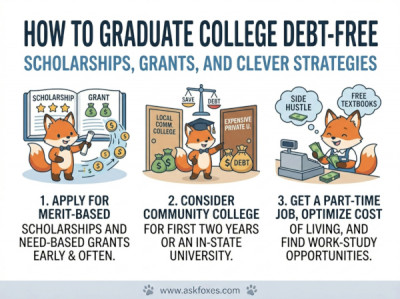
- Pillar 1: Aggressive Grant & Scholarship Acquisition. Treat study-abroad funding as a high-stakes search. Prioritize "niche" scholarships provided by your home university's international office, as well as destination-specific government grants (like the Gilman Scholarship for US students).
- Pillar 2: Strategic Geographic Selection. Avoid expensive Western European hubs. Target universities in Central or Eastern Europe, Southeast Asia, or Latin America where tuition and cost-of-living are significantly lower, effectively multiplying the value of your existing budget.
- Pillar 3: The "Local-Cost" Lifestyle. Bypass the expensive "international student" bubble. Shop at local markets, utilize municipal student housing, and leverage local public transportation passes rather than relying on tourist-targeted services.
- Pillar 4: Academic Load Maximization. Enroll in the maximum allowed credit load to ensure that every dollar invested in your tuition covers the highest possible amount of academic progress. This reduces your overall time-to-degree and limits the number of semesters you must finance at your home institution.
The Budget Matrix: Standard Program vs. Optimized International Protocol
Assess how your logistical behavior dictates your total study-abroad expenditure.
| Operational Metric | Standard Study-Abroad Profile | Budget-Optimized Operator |
|---|---|---|
| Geographic Target | Expensive capitals; high cost. | Low-cost nodes; high purchasing power. |
| Funding Source | Personal funds/High-interest loans. | Grant/Scholarship-heavy model. |
| Accommodation | Private housing; premium rates. | Municipal dorms/Hostel-exchanges. |
| Operational Load | Low: High convenience, high cost. | High: High discipline, low cost. |
The "International Study" Operational Code
To maintain your $40-per-day or low-cost threshold during your abroad tenure, you must adhere to your financial constraints with the same discipline you apply to a business project. Use this logic to regulate your spending:
By implementing these hacks, you stop being a tourist who is "paying for convenience" and start being an operator who is "paying for an international edge." You will find that these small, disciplined decisions accumulate, allowing you to sustain your study-abroad semester without depleting your financial reserves. Master the discipline, and you will thrive academically and globally without accumulating debilitating debt.