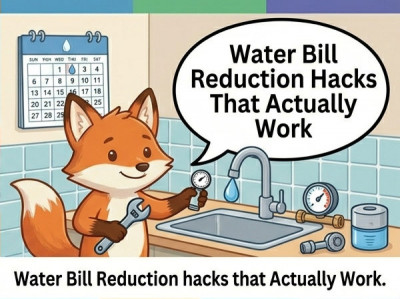
Water Bill Reduction Hacks That Actually Work
Most households treat water bills as fixed expenses that cannot be meaningfully reduced.
In reality, water usage is one of the most flexible utility costs in a home—because a large portion of it comes from daily habits rather than unavoidable consumption.
Small changes in behavior, combined with simple upgrades, can lead to noticeable monthly savings without reducing comfort.
Why Water Bills Are Often Higher Than Necessary
Many people underestimate how much water is wasted in everyday routines.
Common hidden sources of water waste include:
- Long showers
- Leaky faucets and pipes
- Running taps while brushing teeth or washing dishes
- Outdated appliances
- Overwatering gardens or plants
Individually, these seem minor, but they add up significantly over a month.
The Fastest Way to Reduce Water Bills: Fix Leaks
Even a small leak can lead to continuous water loss over time.
Dripping faucets and hidden pipe leaks are among the most expensive unnoticed issues in households.
Common signs of leaks include:
- Unexpectedly high water bills
- Constant dripping sounds
- Damp spots under sinks
- Running toilet sounds
Fixing leaks is often the highest-return water-saving action available.
Shower Time: The Biggest Daily Water Cost
Showers are one of the largest contributors to household water usage.
Reducing shower duration by just a few minutes can significantly lower monthly consumption.
Simple improvements include:
- Using a timer for showers
- Turning off water while soaping
- Installing low-flow showerheads
- Avoiding unnecessary long rinsing
These changes require minimal effort but produce consistent savings.
Low-Flow Fixtures: Small Upgrade, Big Impact
Modern water-saving fixtures are designed to reduce usage without affecting performance.
Key upgrades include:
- Low-flow showerheads
- Aerated faucets
- Dual-flush toilets
These devices reduce water flow while maintaining adequate pressure for daily tasks.
Smart Kitchen Water Habits
The kitchen is another major source of water consumption.
Common wasteful habits include running water continuously during dishwashing or food prep.
More efficient alternatives include:
- Using a basin instead of running water
- Soaking dishes before washing
- Only running full dishwasher loads
- Thawing food in the fridge instead of under water
These small adjustments can reduce unnecessary water usage without changing daily routines.
Laundry Optimization for Lower Water Use
Washing machines can use large volumes of water per cycle.
Efficiency improvements include:
- Running full loads only
- Using eco or water-saving modes
- Avoiding extra rinse cycles when unnecessary
- Choosing high-efficiency machines when upgrading
Over time, optimized laundry habits significantly reduce household consumption.
Outdoor Water Usage: The Hidden Expense
Outdoor water use is often overlooked but can be a major contributor to high bills.
Common outdoor usage includes:
- Garden irrigation
- Lawn watering
- Car washing
- Cleaning driveways or patios
Efficiency strategies include:
- Watering early morning or late evening
- Using drip irrigation systems
- Collecting rainwater when possible
- Reducing unnecessary lawn watering
Behavioral Changes That Reduce Water Waste
Technology helps, but habits have the biggest long-term impact.
Simple behavioral changes include:
- Turning off taps while brushing teeth
- Using a cup for rinsing
- Shortening daily showers
- Reusing water where safe (e.g., plants)
These actions cost nothing but reduce usage immediately.
Water-Saving Myths That Don’t Actually Help
Some commonly shared “hacks” are not as effective as they seem.
Examples include:
- Extremely short-term water restrictions that are not sustainable
- Overcomplicated DIY systems with low real-world savings
- Ignoring leaks while focusing only on small habits
Effective savings come from consistent, repeatable actions—not extreme short-term behavior.
Simple Monthly Water Reduction Checklist
2. Install faucet aerators if missing
3. Reduce shower time by 2–5 minutes
4. Run full laundry loads only
5. Avoid running taps unnecessarily
6. Adjust outdoor watering schedule
7. Monitor monthly water usage trends
This checklist helps maintain long-term efficiency without constant effort.
The Psychology of Water Usage
Water usage often feels “invisible” because it is not directly tracked during daily activities.
Unlike electricity or cash spending, small water actions do not feel like financial decisions.
Making usage more visible through habits or tracking can naturally reduce waste.
The Smart Utility Rule
Reducing water bills is not about sacrificing comfort.
It is about eliminating unnecessary waste while maintaining the same lifestyle.
Most households can reduce consumption significantly simply by fixing leaks, optimizing fixtures, and adjusting daily habits.
Over time, these small improvements compound into meaningful monthly savings.