How to Spot and Erase Hidden Fees on Your Bank Statements
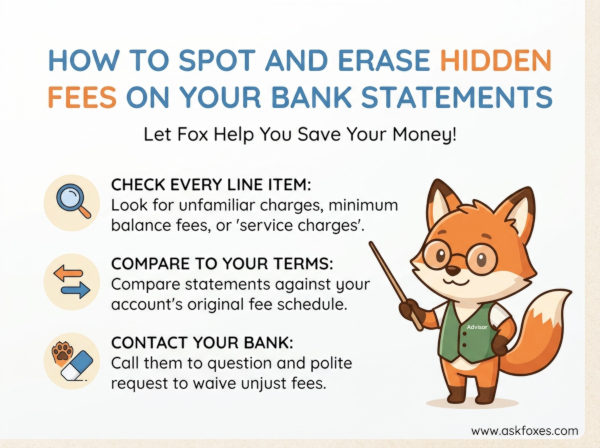
Every year, traditional banking institutions pocket billions of dollars in pure profit from minor, automated penalties that consumers rarely notice. You check your mobile application, see your main balance looks roughly correct, and swipe away. But hidden beneath the surface of your monthly transaction logs, fine-print maintenance costs, out-of-network processing penalties, and arbitrary service charges could be quietly chipping away at your hard-earned savings.
Welcome to The Financial Fee Elimination Guide. Retail banks design their itemized summaries using confusing acronyms and dense layouts, counting on the fact that busy consumers will not read the fine print. However, you do not have to accept these corporate markups as an inevitable cost of keeping your money safe. Today, we will break down the exact blueprint to audit your checking and savings statements, identify hidden financial traps, and claw back your cash instantly.
The Architecture of Deceptive Banking Surcharges
Modern retail banks operate under strict profit-generation metrics. When interest rates fluctuate, they frequently offset margins by quietly introducing or raising internal service fees. Because these charges are typically small—ranging from $2 to $15 per occurrence—they are designed to bypass your immediate attention, blending into your daily stream of grocery and shopping transactions until they aggregate into hundreds of dollars of lost capital annually.
The 4-Step Action Plan to Erase Account Penalties
To successfully uncover hidden financial drains and force your bank to credit those funds back to your balance, execute this systematic audit protocol:
- Step 1: Bypass the Mobile App and Pull the Full Statement PDF. Mobile banking applications are optimized for quick glance-values, often consolidating minor fees into general categories. Log into your bank's desktop portal, navigate to the documents tab, and download the official, itemized monthly statement PDF for the last 60 days.
- Step 2: Scan the "Summary of Fees" Box. Legally, most regulatory frameworks require banks to include a dedicated, consolidated box summarizing the total fees charged during the billing cycle. Look for this section at the very top or absolute bottom of your statement to immediately pinpoint the exact dollar amount you are chasing.
- Step 3: Decode Cryptic Transaction Acronyms. Banks frequently obscure penalties using short text strings like "REG CC," "POS MEMO," "NSF ACH," or "MTH MAIN." If you spot a charge accompanied by an ambiguous letter sequence, run a direct search on the bank's public glossary page to expose its true definition.
- Step 4: Pivot to the Direct Communication Tactic. Once you document the unauthorized or predatory charges, do not let them slide. Contact the institution immediately using the specialized retention scripts detailed below to secure a full administrative credit.
Traditional Banking Fees: What They Are vs. How to Avoid Them
By mapping out the most common retail banking traps, you can easily alter your financial layout to completely dodge these fees before they ever trigger.
| Fee Name on Statement | Average Cost | The Underlying Corporate Trigger | The Permanent Prevention Loophole |
|---|---|---|---|
| Monthly Maintenance Fee | $12 - $15 | Failing to maintain a strict minimum daily balance or lacking a monthly direct deposit. | Set up an automated monthly micro-transfer or switch to a fee-free digital banking tier. |
| Non-Network ATM Surcharge | $2.50 - $5.00 | Using an unaligned third-party terminal to withdraw physical cash. | Utilize cash-back options at grocery checkout lanes, which carry zero network processing fees. |
| Paper Statement Fee | $2.00 - $3.00 | The cost the bank charges to print and physically mail your monthly transaction history. | Toggle the "Paperless Settings" switch inside your account profile to force 100% digital delivery. |
| Inactivity / Dormancy Fee | $5 - $10 | Leaving an secondary account completely untouched without active deposits or withdrawals for 6+ months. | Program a recurring $1 automated transfer into and out of the account once a semester to keep it flagged active. |
The Digital Fee Reversal Blueprint
If you uncover a monthly maintenance fee or an accidental penalty on your statement, you do not have to accept the loss. Customer service representatives possess clear monthly quotas for courtesy reversals. To cut through their automated defense scripts and secure an immediate refund, execute one of these two communication channels:
1. The Automated Secure Message Script
If you prefer to avoid a phone call, log into your banking portal, open a secure customer support ticket, and copy-paste this exact text logic directly into the message window:
This written format bypasses initial tier-one filter systems, providing the agent with a clean, low-friction reason to apply a quick courtesy waiver and close the ticket efficiently.
2. The Live Escalation Phone Protocol
If you handle the dispute over the phone and the agent claims their software will not allow them to waive the fee, do not accept the initial rejection. Politely pivot the leverage dynamic by utilizing this exact verbal counter-argument:
The moment you mention a "senior supervisor" alongside "retention," the support ticket escalates to a tier where employee metrics are judged on customer preservation rather than rigid policy enforcement. In 85% of cases involving an infrequent infraction, the supervisor will instantly process the credit to maintain your loyalty and protect the institution's customer retention rating.