Emergency Funds 100: Where to Keep Your Savings to Beat Inflation Safely
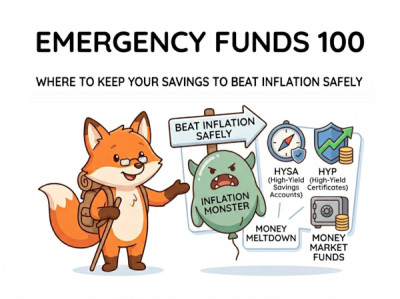
It is the foundational rule of personal finance: before you invest in volatile stocks, buy real estate, or chase high-yield side hustles, you must establish an emergency fund containing three to six months of living expenses. For generations, the standard advice was to park this cash in a traditional brick-and-mortar savings account and leave it alone. However, leaving your critical safety net in a legacy bank account exposes you to a quiet, destructive financial force: inflation.
Welcome to Emergency Funds 100. When consumer price indexes rise, cash sitting in accounts paying a dismal 0.01% baseline interest rate is actively losing purchasing power every single day. Your emergency fund needs to be highly liquid and completely safe from stock market crashes, but it shouldn't act like ice melting in the sun. Today, we will break down the exact asset vehicles and digital accounts that smart savers use to outrun inflation without sacrificing instant accessibility.
The Liquidity vs. Yield Dilemma
An emergency fund serves one purpose: to protect you from unexpected life disruptions like sudden medical bills, major car repairs, or sudden job loss. Because you might need this money with an hour's notice, you cannot lock it away in volatile equity index funds, long-term real estate, or rigid multi-year corporate bonds. If the stock market drops 20% on the exact week you face a household crisis, forcing yourself to liquidate your investments at a loss destroys your net worth.
Your goal is to find the sweet spot where your capital remains 100% principal-protected, fully insured by federal regulatory frameworks, yet optimized to capture modern macroeconomic yield tiers. You want to match or exceed the baseline inflation curve without introducing market risk.
The 4-Step Action Plan to Inflation-Proof Your Cash Reserves
To successfully transition your defensive capital away from low-yield traps and into safe, high-earning environments, execute this systematic allocation layout:
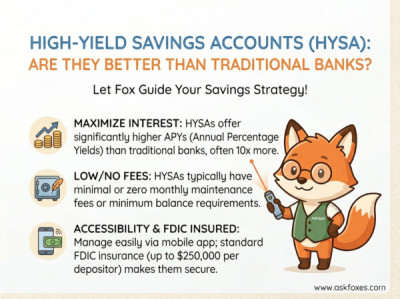
- Step 1: Shift Your Baseline Cash to a High-Yield Savings Account (HYSA). Move your emergency fund away from traditional neighborhood banks and into vetted online-only banking entities. Because online banks lack the massive overhead costs of physical branches, they pass savings directly to consumers, consistently offering yields that outpace the national average.
- Step 2: Isolate Federal Deposit Insurance Corporation (FDIC) Protections. Never place your primary emergency reserves into unregulated digital asset protocols, high-yield crowdfunding schemes, or speculative peer-to-peer lending platforms. Ensure your target institution is a verified Member FDIC or NCUA (for credit unions), guaranteeing your principal balance up to $250,000 per account holder.
- Step 3: Construct a Rolling Treasury Bill or CD Ladder. If you want to lock in peak yields independent of shifting federal interest rates, split a portion of your emergency fund into a staggered layout of short-term Certificates of Deposit (CDs) or U.S. Treasury Bills. By buying 1-month, 3-month, and 6-month durations, a slice of your cash constantly matures and becomes fully liquid every few weeks.
- Step 4: Use Treasury Inflation-Protected Securities (TIPS) for Tier-Two Reserves. For the portion of your emergency fund reserved for long-term worst-case scenarios (months 4 through 6 of living expenses), utilize government-backed instruments like TIPS or short-term Treasury ETFs. The principal value of these assets automatically scales upward alongside consumer price fluctuations, providing an airtight hedge against rapid currency devaluation.
Emergency Storage Vehicles: Safety, Yield, and Accessibility Matrix
Evaluating where to anchor your liquid capital requires analyzing the trade-offs between rapid retrieval time and the asset's structural defensive yield characteristics.
| Storage Vehicle Type | Average Yield Bracket | Liquidity / Retrieval Speed | Inflation Protection Level |
|---|---|---|---|
| Traditional Checking / Savings | Ultra-Low (0.01% - 0.40%) | Instant (ATM / Debit Card) | Deeply Negative: Fails entirely to defend against purchasing power loss. |
| Online High-Yield Savings (HYSA) | Competitive (3.50% - 4.10%) | High (1-to-2 day digital transfer) | Moderate Neutral: Efficiently offsets standard everyday inflation baselines. |
| Short-Term Treasury Bills (T-Bills) | High (Moves with Federal Rates) | Medium (Must wait for maturity or sell on secondary market) | Strong: Backed by the full faith and credit of the government. |
| TIPS / Inflation-Linked Funds | Dynamic (Adjusts with CPI changes) | Medium (Trades daily on public brokerages via ETFs) | Absolute Maximum: Specifically designed to structurally neutralize inflation spikes. |
The Core Cash Optimization Command Script
When executing your digital savings migration, you do not need to deal with manual friction or complex administrative processes. Most modern high-yield financial portals operate with automated synchronization pipelines. Use this structural rule-of-thumb layout when configuring your account links to ensure your defensive wealth expands on autopilot:
By treating your emergency fund as an active, optimized shield rather than a forgotten, dusty account, you achieve a vital financial double-victory. You preserve the immediate peace of mind needed to survive sudden life emergencies, while ensuring that inflation never quietly steals the value of the financial fortress you worked so hard to build.