High-Paying Micro-Skills You Can Learn in a Weekend to Boost Your Resume
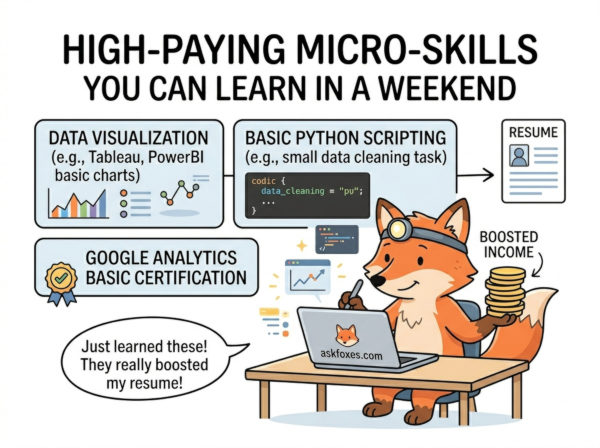
In the modern job market, you don't need a four-year degree or a complex certification to signal high-level professional competence. You need to demonstrate "skill-stacking"—the ability to combine specific, technical micro-skills that solve immediate, high-friction problems for busy corporate teams. While your peers spend months theorizing about "career pivots," the most effective operators identify tiny, repeatable bottlenecks in the workflow and learn the specific tools to automate or optimize them over a single weekend.
Welcome to The Micro-Skill Accelerator. High-paying micro-skills are not about general knowledge; they are about immediate, output-oriented leverage. By mastering one specific tool that saves a team ten hours of manual labor, you become a "force multiplier"—an employee who creates more value than they consume. Today, we will deconstruct the specific micro-skills that provide the highest immediate ROI for your resume and show you how to master them in just two days.
The Weekend Mastery Framework: Selecting Your Leverage Point
To master a skill in 48 hours, you must discard the "academic learning" approach. Do not read introductory textbooks or watch 10-hour theoretical lecture series. Instead, focus entirely on **Outcome-Based Sprinting**. Identify a real-world project—such as automating a spreadsheet, building a landing page, or cleaning a raw dataset—and force yourself to build it from scratch using nothing but targeted documentation and focused software tutorials.
The goal is to reach a "minimum viable competency" where you can confidently explain the tool's utility, demonstrate a working output, and apply it to a business problem. When you put this on your resume, you aren't just listing a keyword; you are signaling that you possess the **Rapid Synthesis Capability**—a trait that is far more valuable to executive leadership than ten years of stagnant experience.
The 4-Step Blueprint to Weekend Skill Mastery
To successfully integrate a high-leverage micro-skill into your operational arsenal without wasting months, execute this concentrated learning sequence:
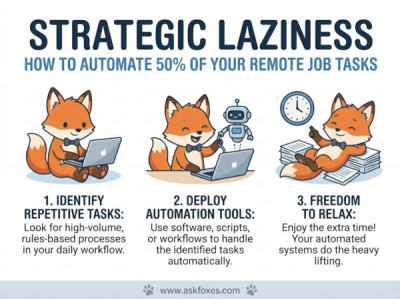
- Step 1: Identify the "Departmental Bottleneck." Scan your industry's common remote job descriptions. What is the one task that everyone hates doing? (e.g., formatting client reports, manually migrating data between apps, or tracking complex project milestones). This is your high-leverage target.
- Step 2: Isolate the "80/20" Tool-Set. Don't try to learn an entire software ecosystem. Identify the 20% of the tool's features that produce 80% of the output. If you are learning data automation, focus exclusively on the specific triggers and actions in your chosen integration platform, not the entire coding language behind it.
- Step 3: Execute the "Project-Driven Weekend Sprint." Dedicate Saturday to "Guided Build," where you follow a targeted project tutorial to create a functional result. Dedicate Sunday to "Reverse Engineering," where you tear down your project, modify the logic, and fix any errors until you fully understand how the system components interact.
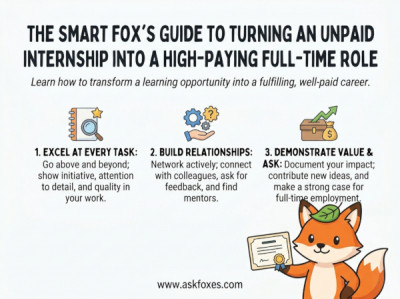
- Step 4: Package the Output as a Professional Asset. Document your weekend result as a "Personal Case Study." Create a simple PDF or a brief, one-page digital portfolio link that shows the "Before" (manual, inefficient) and "After" (automated, optimized) states. This transforms the skill from an abstract claim into an undeniable business asset.
The Skill Leverage Matrix: High-ROI vs. Low-Utility
Evaluating which skills to prioritize requires a cold analysis of what actually saves corporate time and generates measurable, high-value outcomes for leadership teams.
| Skill Category | The High-ROI Micro-Skill | The Expected Baseline |
|---|---|---|
| Data Synthesis | Automated SQL querying or advanced Excel pivot-logic that generates live executive dashboards. | Manually updating rows and columns in static spreadsheets. |
| Workflow Logic | No-code integration (e.g., Zapier/Make) connecting apps to eliminate manual data entry. | Copy-pasting files from one drive to another periodically. |
| Digital Content | AI-driven dynamic template engineering for personalized outreach at scale. | Writing individual emails or social posts from scratch every single day. |
| Career Outcome | Force Multiplier: You are seen as an elite system optimizer who elevates the entire team. | Commoditized Asset: You are seen as a replaceable labor unit with standard skills. |
The Weekend Micro-Skill Acquisition Code
When you sit down to master a new tool, do not let "analysis paralysis" or the feeling of being a beginner slow your momentum. Treat your learning sessions like a corporate project—define the scope, set the deadline, and drive until the output is delivered. Use this operational logic to keep your skill acquisition focused on high-value results:
By treating your career as an ongoing series of high-impact technical sprints, you stop competing with the masses who rely on outdated, static resumes. You become an agile professional who demonstrates that you can learn, master, and deploy new tools in real-time. True high-value career autonomy isn't about what you know; it is about how fast you can synthesize new systems to drive elite-level results. Master these micro-skills, and you become a permanent candidate for the highest-paying, most efficient roles in the digital economy.