How to Turn an Unpaid Internship Into a High-Paying Full-Time Role
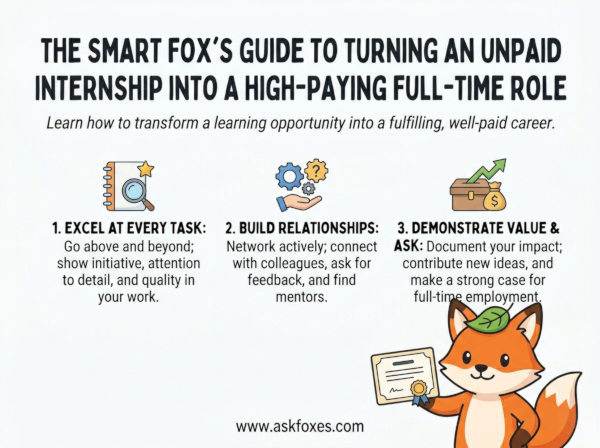
The unpaid internship is often viewed as a temporary rite of passage, but for the elite operator, it is actually a strategic audition. Most interns arrive with a "student" mindset, waiting to be assigned tasks. This is a fatal error. To turn an unpaid role into a high-paying, full-time offer, you must shift your mindset from "learner" to "immediate contributor." You aren't there to gain experience; you are there to solve structural problems that your managers are too busy to address.
Welcome to The Internship-to-Hire Conversion Protocol. To secure your future offer, you must stop operating as a cost center and start operating as a force multiplier. By identifying high-friction bottlenecks within the team and engineering automated solutions for them, you render yourself operationally indispensable. Today, we will deconstruct the systematic approach to transforming your unpaid tenure into a leveraged, high-salary professional career.
The High-Impact Contribution Matrix
Management teams do not hire interns because they like them; they hire them because they reduce risk and increase team velocity. If you are merely completing the tasks given to you, you are replaceable. If you are consistently identifying, proposing, and executing optimizations that save your manager time, you become a core operational asset.
The 4-Step Blueprint to Engineering Your Full-Time Offer
- Step 1: Conduct a "Pain-Point" Audit. In your first two weeks, listen for the complaints. What does your team complain about? What takes them three hours to do every Monday? This is your target. Identify a repetitive manual process that you can solve.
- Step 2: Propose the "Automated Solution." Do not wait for permission to innovate. Propose a better way to handle the task using the micro-skills you’ve mastered (e.g., AI templates, no-code integrations, or structured data dashboards). Present the "Before" vs. "After" time-savings to your manager.
- Step 3: Document Your "Institutional Value." Create a living document that tracks every time-saving project, research insight, or efficiency gain you’ve delivered. When you eventually sit down for your offer negotiation, you won't be asking for a job; you will be presenting a balance sheet of your impact.
- Step 4: Align with the Team’s Revenue Goals. Understand exactly how your department contributes to the company's bottom line. Connect your tasks directly to those goals. If the team is focused on lead generation, show how your data cleanup directly led to more accurate outreach campaigns.
The Conversion Dynamics: Passive Intern vs. Strategic Asset
Moving to a full-time role requires you to shed the "intern" label and adopt the habits of an autonomous professional. Use this matrix to guide your daily operational behavior.
| Metric | The Passive Intern | The Strategic Conversion Asset |
|---|---|---|
| Problem Solving | Waits for instructions on how to solve a task. | Identifies systemic bottlenecks and proposes solutions proactively. |
| Communication | Requests feedback on performance. | Presents evidence of results achieved. |
| Workflow | Follows existing (often broken) manual processes. | Engineers new automated systems to scale team output. |
| Offer Probability | Low: Viewed as an "extra pair of hands." | High: Viewed as an essential system optimizer. |
The "Indispensability" Communication Script
When the time comes to discuss your future, do not talk about your need for a job or your desire for experience. Talk about the value you have already established and how you plan to scale that value further. Use this script to steer the conversation toward your full-time transition:
By engineering your own indispensability, you change the nature of the conversation from "will they hire me?" to "how can they afford to lose me?" Treat your internship not as a period of unpaid labor, but as a period of extreme value-testing. Master these workflows, deliver measurable impact, and you will secure your full-time role on your own terms.