How to Build a Professional LinkedIn Network Before You Graduate
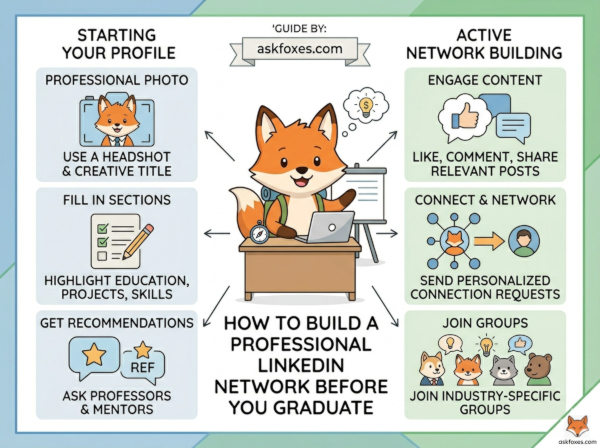
In the modern job market, your LinkedIn profile is your most persistent professional asset. To build a robust network before graduation, you must stop treating LinkedIn as a passive repository for your resume and start utilizing it as an active engagement platform. By positioning yourself as a professional-in-training rather than a student, you command greater respect and foster higher-quality connections.
Welcome to The Professional Networking Protocol. Networking is not about the quantity of your connections; it is about the relevance and strategic utility of your professional circle. Today, we will deconstruct the systematic framework required to build a high-leverage network from the ground up.
The Network Engineering Blueprint
To scale your professional presence, you must move through a structured sequence of optimization, outreach, and consistent engagement.
The 4-Pillar Networking Framework
- Pillar 1: Profile Optimization. Treat your profile as a personal marketing page. Use a high-quality headshot and a professional headline that highlights your target career path, not just your university major. Your "About" section must detail your skills and aspirations, focusing heavily on transferable experience gained from projects, clubs, or part-time work.
- Pillar 2: Strategic Network Acquisition. Build your circle systematically. Start with "warm" connections (professors, classmates, alumni), then use the "Alumni Tool" on your university’s LinkedIn page to filter for industry leaders in your target field. Always personalize your connection requests with a specific reason for reaching out, such as a shared interest or an insightful comment on their work.
- Pillar 3: High-Yield Engagement. Transition from a "stranger" to a "known entity" by engaging with relevant content. Follow your target companies, comment thoughtfully on industry discussions, and actively participate in industry-specific groups to build visibility.
- Pillar 4: The Informational Interview. Do not lead with requests for jobs; lead with a request for knowledge. Ask for 10–15 minutes of an expert's time to ask 1–2 specific questions regarding their career path. This builds genuine rapport and often leads to organic mentorship or job referrals.
The Network Matrix: Passive vs. Active Positioning
Compare the impact of standard student behavior against professional networking strategy.
| Operational Metric | Passive Student Profile | Strategic Professional Profile |
|---|---|---|
| Profile Identity | "Student at [University]." | "Aspiring [Field] Professional." |
| Outreach | Cold, generic connection requests. | Personalized, value-driven messages. |
| Engagement | Non-existent; passive browser. | Consistent; active contributor/commenter. |
| Networking Goal | Low: Just looking for a job. | Optimized: Building long-term relationships. |
The "Professional Visibility" Operational Code
To successfully build your network, treat your LinkedIn presence as a long-term career project. Use this logic to ensure your strategy remains effective:
By enforcing these standards, you stop being an anonymous applicant and start being a known, credible professional in your chosen industry. You are building the foundation of your future career. Master these networking tactics, maintain your professional engagement, and you will secure a competitive edge long before your graduation day arrives.