Cheap and Healthy Dorm Room Meal Plans That Require Zero Cooking Skills
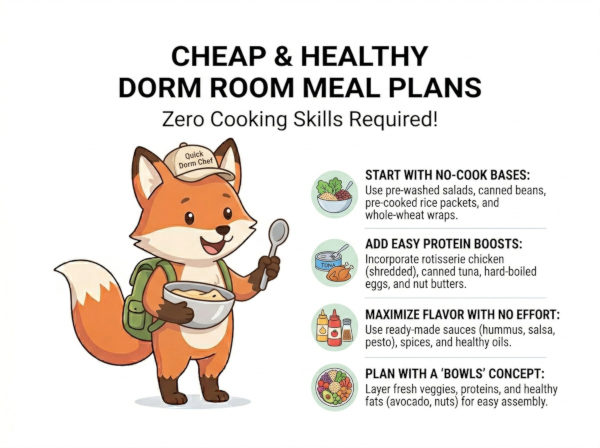
In a dorm environment, the temptation to rely on high-cost, low-nutrient processed snacks or expensive campus meal plans is a massive operational drain. You do not need a stove or culinary training to maintain a healthy baseline; you need an efficient, pantry-based infrastructure that favors assembly over cooking.
Welcome to The Dorm-Room Nutrition Protocol. By shifting your focus to shelf-stable, ready-to-eat whole foods, you can sustain your cognitive performance for pennies on the dollar. Today, we will deconstruct the "assembly-only" meal framework designed for the space-constrained student.
The "No-Cook" Nutritional Blueprint
To succeed at dorm-room nutrition, you must maintain a stock of high-leverage ingredients that can be combined in under 3 minutes.
The 4-Pillar Nutrient Framework
- Pillar 1: Shelf-Stable Protein Anchors. Utilize canned tuna, canned chickpeas/beans, pre-cooked protein pouches (chicken/salmon), and high-quality nut butters. These require zero prep and provide the necessary protein to maintain muscle mass and focus throughout long study sessions.
- Pillar 2: Ready-to-Consume Fiber & Produce. Purchase washed, ready-to-eat greens (spinach/arugula), baby carrots, cucumber, and shelf-stable fruits (apples/bananas). These serve as the foundation of your meals, providing the micronutrients necessary for sustained energy.
- Pillar 3: Instant Grain & Seed Bases. Stock pre-cooked grain pouches (quinoa/brown rice) that can be eaten at room temperature or quickly microwaved. Add chia seeds, flax seeds, or hemp hearts to any meal to instantly boost the omega-3 and fiber content without needing a burner.
- Pillar 4: Minimalist Flavor Optimization. Keep a small set of high-impact condiments: extra virgin olive oil, balsamic vinegar, hot sauce, and pre-mixed seasoning blends. These allow you to turn simple raw ingredients into cohesive, palatable dishes instantly.
The Nutrition Matrix: Campus Dining vs. The No-Cook Protocol
Compare the cost and nutritional utility of traditional dining plans versus your own optimized pantry system.
| Metric | Campus Dining Plan | No-Cook Pantry Protocol |
|---|---|---|
| Daily Cost | High (fixed, non-refundable). | Low (cost-per-unit efficient). |
| Nutritional Density | Variable; often high in processed additives. | High; total control over ingredients. |
| Prep Time | High (travel/wait time). | Zero; assembly only. |
| Cognitive Impact | Neutral: Subject to menu constraints. | Optimized: High-protein, high-fiber baseline. |
The "Dorm-Room" Operational Code
To maintain your nutritional standards in a dorm, you must treat your pantry as a logistics project. Use this logic to ensure your supply chain never breaks:
By shifting to an assembly-based diet, you stop being a passive consumer of campus food and start taking ownership of your cognitive and physical health. It requires minimal space, zero culinary skills, and provides a massive ROI in both health and financial savings. Master this pantry strategy, stay disciplined with your inventory, and you will thrive academically while maintaining a high-performance, debt-free nutritional lifestyle.