Roommate Agreements: How to Split Bills and Chores Without the Drama
Living with others is a logistical operation that frequently fails due to ambiguous expectations and lack of accountability. When you rely on unspoken agreements regarding chores or bill splitting, you invite friction. To maintain a functional household, you must treat your living arrangement as a professional partnership where clear, documented protocols replace interpersonal guesswork.
Welcome to The Domestic Sovereignty Protocol. By formalizing your household management at the start of your lease, you eliminate the ambiguity that drives most roommate drama. Today, we will deconstruct the strategy for establishing a transparent and friction-free living environment.
The Household Stability Blueprint
To avoid conflict, you must move from passive expectations to proactive management. Use these structured pillars to govern your shared space.
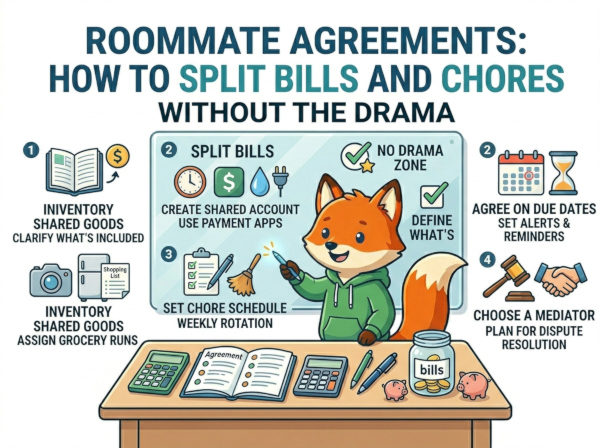
The 4-Pillar Domestic Framework
- Pillar 1: Financial Transparency. Eliminate debt-collection stress by using an app like Splitwise to track shared expenses in real-time. Define a specific "bill day" each month to ensure utilities, rent, and communal supplies are covered immediately.
- Pillar 2: Standardized Chore Rotation. Do not rely on "as-needed" cleaning, which is subjective and prone to laziness. Implement a rotating schedule that assigns specific zones (kitchen, bathroom, floors) to specific roommates on a weekly basis, ensuring total coverage of all maintenance tasks.
- Pillar 3: The "Commonality" Boundary. Clearly define which supplies are communal (e.g., dish soap, toilet paper) and which are private (e.g., specific food items, toiletries). Document this list to prevent the "I thought this was for everyone" excuse.
- Pillar 4: Structured Feedback Loops. Hold a 15-minute "house meeting" once a month. This is not for socializing; it is for auditing the chore rotation, resolving minor grievances, and adjusting the bill-split protocol if usage patterns change. It provides a formal venue to address issues before they escalate into conflicts.
The Domestic Matrix: Implicit Expectations vs. Explicit Protocols
Compare the impact of informal living versus a structured roommate partnership.
| Metric | Informal/Implicit Living | Formal/Protocol-Driven Living |
|---|---|---|
| Bill Management | Chaotic; reliance on verbal reminders. | Automated; real-time tracking via Splitwise. |
| Chore Oversight | Subjective; leads to resentment. | Objective; rotating, assigned zones. |
| Conflict Resolution | Reactive; emotional confrontations. | Proactive; scheduled house meetings. |
| Operational Load | High: Constant, low-level stress. | Optimized: Predictable, stable, and clear. |
The "Household Sovereignty" Operational Code
To ensure a drama-free environment, treat your home as an organization that requires consistent maintenance. Use this logic to regulate your household:
By enforcing these standards, you shift your living situation from an unpredictable emotional burden to a stable, well-managed system. You aren't just roommates; you are co-managers of a shared environment. Master these protocols, maintain the audit schedule, and you will effectively eliminate the source of most household drama.