Resigning with Style: How to Quit Your Job and Keep Your Executive Network Intact
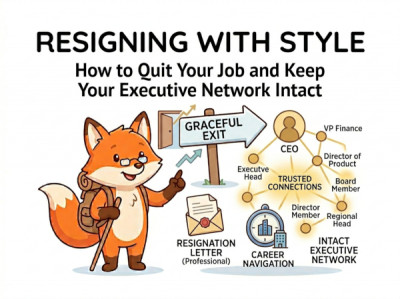
Resignation is the final act of your professional tenure at an organization, and it carries as much weight as your initial interview. Many employees treat the exit as a release of responsibility, often burning bridges through careless communication, premature social media declarations, or incomplete handoffs. In the high-level corporate world, your reputation is the most portable asset you own. Your goal is not just to leave a role, but to convert your former employer into a long-term professional ally.
Welcome to The Executive Resignation Protocol. Exiting a position isn't about escaping a workspace; it is about managing a structural transition. By executing a clean, systematic departure, you transform a potentially awkward separation into an opportunity to solidify your brand as a disciplined, high-integrity operator. Today, we will deconstruct the exact communication scripts and operational maneuvers to resign with absolute style while keeping your executive network fully intact.
The Anatomy of a High-Integrity Exit
In your career, your network is your most valuable insurance policy. Executive recruiters and industry peers operate in tight, interconnected loops; a story about a bridge burned in one department can travel across the entire industry within weeks. Conversely, a reputation for an organized, supportive, and professional exit often travels faster. When you resign, you are not just leaving a desk; you are effectively interviewing for your next role through your final actions.
Your departure plan must be structured around three pillars: transparency with leadership, a seamless handover of operational assets, and long-term relationship curation. You must act as the primary architect of your own departure, removing all burden from your management team and framing your exit as a natural evolution of your professional trajectory.
The 4-Step Blueprint to Execute a Flawless Resignation
To successfully transition out of your current role while leaving your professional reputation completely elevated, execute this systematic departure framework:
- Step 1: Execute a Private Executive Briefing. Schedule a dedicated, one-on-one session with your direct manager to communicate your decision personally before it hits the broader team. Approach the conversation with absolute clarity: thank them for the professional growth opportunities, state your final day clearly, and present your pre-planned transition strategy.
- Step 2: Deliver a Comprehensive Operational Handover Map. Do not leave your team guessing where your projects stand. Spend your final days compiling an exhaustive digital repository: detailed status updates, key contact indices, access credentials, and a tactical road map for your successor. Providing this structured map eliminates the "exit burden" and demonstrates your commitment to the team's success beyond your tenure.
- Step 3: Craft a Unified, Professional Messaging Strategy. Coordinate with your leadership on how and when the team is notified. Keep the narrative positive, future-oriented, and focused on your next stage of professional growth. Avoid venting or discussing any lingering office politics; focus entirely on the value you gained and the gratitude you feel for the shared workspace milestones.
- Step 4: Schedule "Forward-Looking" Networking Cycles. During your final week, personally reach out to the key colleagues, mentors, and executive contacts you’ve built over your tenure. Schedule brief virtual "coffee chats" to thank them for their collaboration and formally request to stay in touch through external platforms, ensuring these contacts remain in your active professional orbit.
The Departure Matrix: Standard Exit vs. Executive Grace
Analyzing how different professional exit styles shape your long-term reputation highlights why the executive grace model provides a much higher return on your career investment.
| Exit Variable | The Standard "Burnout" Exit | The Executive Grace Protocol |
|---|---|---|
| Communication Tone | Emotional, rushed, and focused on why you are "escaping" the role. | Controlled, grateful, and focused on professional transition and gratitude. |
| Operational Handoff | Partial, disorganized, or incomplete file dumping in the final hours. | Structured, documented, and proactive transition mapping for your successor. |
| Network Reaction | Colleagues feel abandoned; executive bridges become fragile or permanent burn marks. | Colleagues feel respected and supported; executive ties are reinforced for future collaboration. |
| Long-Term Result | Reputational Debt: A damaged professional legacy that follows you across the industry. | Professional Brand Asset: An elevated reputation as a high-integrity, disciplined operator. |
The Executive Resignation Framing Script
When delivering your resignation, your verbal framing must be firm, positive, and forward-thinking. You are not asking for permission; you are informing leadership of a transition. Use this precise, balanced operational script to guide the conversation with your manager:
By conducting yourself with this level of maturity and systemic foresight, you strip away the awkwardness typically associated with the resignation process. You leave your colleagues with a positive, lasting memory of your professionalism, and you ensure that your executive network remains not just intact, but actively invested in your future success. True sovereignty is the ability to walk away from any professional commitment with your reputation entirely unsullied and your future options fully wide open.