How to Build a One-Person Online Business With AI Tools

The internet has removed one of the biggest barriers to starting a business: the need for a large team.
Today, a single person can launch, run, and scale a digital business using AI tools that handle tasks that once required designers, writers, marketers, and assistants.
This shift has created a new type of entrepreneur: the one-person AI-powered business operator.
The goal is not to replace human thinking, but to use AI as leverage for speed, efficiency, and scale.
Why One-Person Businesses Are Growing Fast
Starting a traditional business usually requires capital, staff, and infrastructure.
AI tools reduce or eliminate many of these requirements.
Key advantages include:
- Lower startup costs
- Faster execution speed
- Reduced workload per task
- Scalable content creation
- Automated customer interactions
This allows individuals to compete with much larger teams in specific digital niches.
The Core Building Blocks of a One-Person AI Business
Most successful solo businesses are built on four key pillars.
| Business Pillar | Purpose |
|---|---|
| Content Creation | Attract attention and traffic |
| Audience Building | Develop long-term trust |
| Offer / Product | Generate revenue |
| Automation | Reduce manual workload |
AI tools can assist or automate each of these stages.
How AI Helps With Content Creation
Content is the engine of most online businesses.
AI tools can assist with:
- Blog writing
- Social media posts
- Email newsletters
- Video scripts
- Product descriptions
This allows creators to publish more consistently without spending excessive time on writing tasks.
Using AI for Marketing and Growth
Marketing is often the most time-consuming part of running a business.
AI can streamline it by assisting with:
- Ad copy generation
- SEO keyword ideas
- Email campaign structure
- Social media scheduling ideas
- Audience targeting insights
This reduces both cost and complexity of marketing operations.
AI Tools for Product Creation
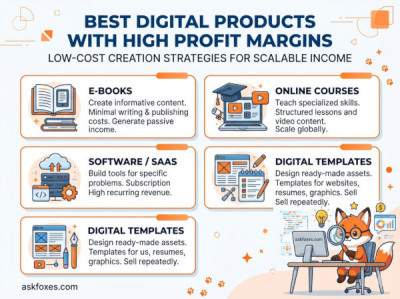
One of the most powerful applications of AI is creating digital products quickly.
Examples include:
- Ebooks and guides
- Online courses
- Templates and checklists
- Notion or spreadsheet systems
- Simple software prototypes
Instead of spending months building a product, AI can help structure and draft it in days or even hours.
Automation: The Key to Scaling Solo
Automation is what transforms a side hustle into a real business system.
Common automation areas include:
- Email responses
- Customer onboarding
- Content scheduling
- Lead collection forms
- Basic customer support replies
With automation, the business can operate even when you are not actively working.
Simple One-Person Business Models
You do not need complex systems to start.
Some beginner-friendly models include:
- Content-based affiliate marketing
- Digital product sales
- Niche blogging
- Faceless social media pages
- Newsletter monetization
AI makes all of these easier to execute consistently.
| Model | Startup Difficulty | Scalability | AI Dependency |
|---|---|---|---|
| Affiliate Content Sites | Low | High | Medium |
| Digital Products | Medium | Very High | High |
| Newsletter Business | Low | High | Medium |
| Faceless Social Pages | Low | High | High |
The Biggest Mistake Beginners Make With AI
Many people assume AI automatically equals income.
This is incorrect.
AI is a multiplier, not a replacement for strategy.
Without clear positioning, even high-quality AI output will not generate results.
How to Choose a Profitable Niche
The niche determines long-term success more than tools do.
Good niches usually have:
- Clear audience pain points
- High demand for information or tools
- Monetization opportunities
- Repeat content potential
Examples include:
- Personal finance
- Productivity systems
- Career development
- Health and fitness
- AI tools and tutorials
A Simple One-Person Workflow
A basic AI-powered business workflow looks like this:
2. Generate content ideas using AI
3. Create content (blog, video, or post)
4. Distribute across platforms
5. Collect audience (email or followers)
6. Offer digital product or affiliate solution
7. Automate repetitive steps
This cycle can be repeated and improved over time.
Time vs Leverage: The Real Shift
Traditional work trades time for money.
One-person AI businesses aim to replace time with leverage.
Instead of doing everything manually, systems and tools handle repetitive tasks.
This allows individuals to focus on strategy, creativity, and decision-making.
Why Consistency Still Matters More Than Tools
Even with AI, success still depends on consistency.
Many beginners stop too early because results are not immediate.
However, digital businesses compound over time.
Content, traffic, and audience growth build momentum gradually.
The Smart Creator Mindset
The most successful one-person businesses do not rely on one viral moment.
They build systems that produce value repeatedly.
AI helps accelerate the process, but long-term success still comes from execution discipline.
The Final Rule of One-Person AI Businesses
AI does not replace entrepreneurship—it removes friction from it.
The winners are not those who use the most tools, but those who combine tools with clear strategy and consistent execution.
A small, focused system run consistently will outperform a complex system that is never fully implemented.