Smart Ways to Cut Your Electric Bill by 30% This Month
Every month, it arrives like an unwanted surprise. You open your utility portal, look at the final triple-digit balance on your electric bill, and wonder how a single household could possibly consume so much power. Most people assume the only way to lower this cost is by sitting in the dark or turning off the heating and cooling entirely. But what if you could easily slash that bill by up to 30% without sacrificing your daily comfort?
Welcome to The Smart Electric Bill Hack. Utility companies profit massively off inefficient household habits and hidden energy drains that consumers completely overlook. By running a strategic home energy audit and making a few tactical adjustments, you can stop overpaying and force your power meter to slow down. Today, we will break down the exact blueprint to optimize your energy consumption starting tonight.
The Secret Energy Hogs Hiding in Plain Sight
When trying to save electricity, most people instinctively turn off a few light bulbs. While switching to LEDs helps, lighting actually accounts for a relatively small fraction of your total energy consumption. The real culprits are appliances that regulate temperature or rely on continuous standby power. Your water heater, central climate systems, older refrigerators, and even your desktop computer setups are the heavy hitters quietly driving up your monthly baseline expenses.
The 4-Step Action Plan to Drop Your Bill This Month
To achieve an immediate 30% drop on your next billing cycle, you need to execute these high-impact adjustments right away:
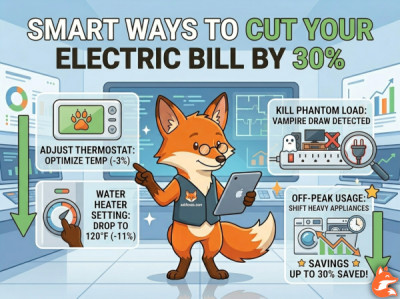
- Step 1: Adjust the Thermostat via the 1-Degree Rule. For every degree you adjust your thermostat closer to the outside temperature (higher in summer, lower in winter), you save roughly 3% on your heating or cooling costs. A simple 3-degree adjustment can instantly wipe nearly 10% off your total bill.
- Step 2: Lower Your Water Heater's Maximum Cap. Most manufacturers ship water heaters set to a scalding 140°F (60°C). Lowering this internal setting to 120°F (49°C) is perfectly safe for showers and dishes, yet it reduces standby heat loss significantly and cuts your water heating costs by up to 11%.
- Step 3: Deploy Smart Power Strips for Entertainment Centers. Group your TV, gaming consoles, soundbars, and streaming devices onto a single smart power strip. These strips automatically cut power to standby devices when the main unit is turned off, instantly killing vampire draw.
- Step 4: Shift Heavy Appliance Use to Off-Peak Hours. Many utility providers charge dynamic rates based on the time of day. Running your dishwasher, clothes dryer, and washing machine late at night or early in the morning avoids premium "peak hour" pricing surcharges.
High-Impact vs. Low-Impact Energy Tactics
To maximize your savings without wasting valuable time, you should focus your energy exclusively on the household modifications that move the financial needle the furthest.
| Energy Saving Tactic | Effort Level Required | Estimated Monthly Savings |
|---|---|---|
| Lowering water heater setting to 120°F | Very Low (5 mins) | $10 - $20 / Month |
| Killing vampire load via smart strips | Low (10 mins) | $15 - $30 / Month |
| Optimizing HVAC timers and filters | Medium (30 mins) | $30 - $60 / Month |
| Unplugging phone chargers manually | High (Daily effort) | Less than $1 / Month |
How to Deal with Your Utility Company
If you have optimized your home and your bill is still unusually high, the issue might not be your consumption habit—it could be a billing structural issue. You still have two powerful administrative options to lower your costs:
1. Request a Free Utility Energy Audit
Call your electricity provider or log into your account portal to see if they offer a free home energy assessment. Many companies will send a technician to your house with thermal imaging cameras to spot insulation leaks entirely for free. Use this phone script when calling customer support:
In many regions, utility companies are legally mandated to help consumers reduce grid load and will even hand you free LED bulbs, low-flow showerheads, and smart outlet adapters during the inspection.
2. Switch to a Budget Billing Plan
If your bill spikes drastically during hot summer months or freezing winters, ask your provider for a "Balanced Billing" or "Budget Billing" plan. The utility company calculates your average annual usage and bills you an identical, predictable amount every single month. While this doesn't reduce total consumption on its own, it completely flattens seasonal spikes and protects your monthly budget from unexpected financial strain.