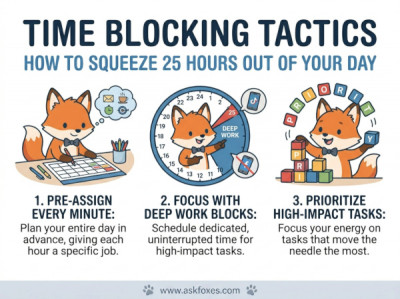
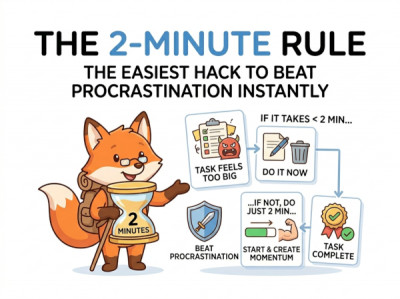
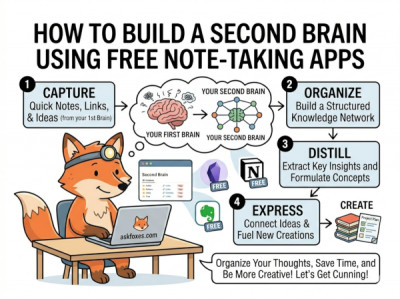
The Time-Chunking Framework: Stop Procrastinating
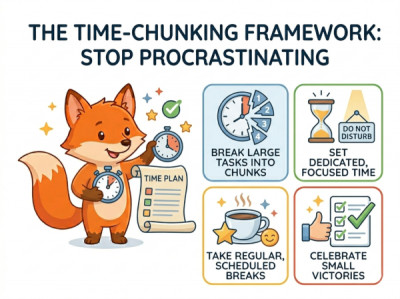
We have all looked at a massive, daunting project and thought: "I will start this tomorrow." But tomorrow comes, and you find yourself cleaning your desk, checking your emails for the tenth time, or scrolling through social media. Procrastination is rarely a reflection of laziness; it is an emotional coping mechanism triggered when a task feels too large for your brain to process safely.
To defeat this mental barrier, you don't need deeper willpower or military-grade discipline. You just need a structural shortcut. Welcome to The Time-Chunking Framework—a psychological hack engineered to trick your brain into starting hard tasks by shrinking your focus window into a manageable, 25-minute sprint.
The Anatomy of a 25-Minute Sprint
The reason most productivity systems fail is that they ask for eight hours of continuous concentration. Human biology isn't built for that. Your brain consumes an immense amount of glucose during deep focus, meaning your cognitive efficiency naturally degrades after roughly 30 to 45 minutes of intense work.
The Execution Protocol Step-by-Step
To successfully run the framework without burning out, you must follow this strict execution sequence:
- Step 1: The Monotasking Declaration. Pick exactly one task. Close all unrelated browser tabs, put your phone in another room, and silence your team chat apps.
- Step 2: Set a Hard 25-Minute Timer. Work on that single task with absolute focus. If you get distracted or remember something else you need to do, write it down on a scratchpad and immediately return to the task.
- Step 3: Force the 5-Minute Brain Reset. When the timer rings, stop working immediately—even if you are in the middle of a sentence. Stand up, stretch, get a glass of water, or look out a window. Do not check your phone.
- Step 4: The Four-Cycle Reward. Repeat this process four times. Once you complete four sprints (100 minutes of deep work), reward yourself with a long 20 to 30-minute break.
System Comparison: Traditional Work vs. Time-Chunking
Let's look at why standard work blocks actually produce fewer results despite taking up more physical hours on the clock:
| Metric | Traditional 8-Hour Block | The Time-Chunking Framework |
|---|---|---|
| True Deep Focus Time | Roughly 2 to 3 Hours (Due to micro-distractions) | 4 to 5 Hours (Pure, uninterrupted output) |
| Mental Fatigue Level | Extremely High by 3 PM (Brain fog) | Low to Medium (Constant mini-recovery resets) |
| Distraction Resistance | Weak (Easy to slip into endless scrolling) | Very Strong (You can resist anything for just 25 mins) |
How to Optimize Your Setup for Deep Work
If you want to turn this framework into an automated habit, you need to reduce the friction of starting. Use these two digital optimizations:
1. Use Native Desktop Timers
Avoid using your smartphone as a timer, as picking it up to stop the alarm introduces an immediate vector for distraction. Instead, use a lightweight menu-bar app on your laptop or a dedicated physical kitchen timer sitting on your desk.
2. The "Pre-Flight" Task Breakdown
Never start a 25-minute sprint with a vague goal like "Work on the new presentation." Your brain will stall. Instead, break it down before the timer starts into highly actionable sub-tasks: "Draft slide 1 to 3 outline" or "Find 3 industry growth statistics." Knowing exactly where to drop your anchor makes starting instantaneous.